When it rains, it pours sometimes. Last year the Mountaineers lost Karl Joseph after 4 games. Last week it was announced Dravon Askew-Henry was lost for the season and now top recruit Brendan Ferns may be done as well.
The bad karma Tony Gibson has inherited over the last 9 games has to be wearing on the West Virginia defensive coordinator. He saw Karl Josephy, WVU’s top safety and an eventual first round draft pick of the Oakland Raiders, lost to a torn ACL during a non-contact drill.
Just last week, the top returning tackler for WVU, Dravon Askew-Henry was lost to a torn ACL from a non-contact drill. Coach Dana Holgorsen stated he landed funny after jumping for a ball. Now, the highest rated linebacker to ever sign with the Mountaineers, Brendan Ferns, has been lost for the season as well.
Ferns sustained the injury Monday during practice. The team took him for an MRI today and head coach Dana Holgorsen announced that Ferns was lost for the season.
Ferns came to WVU with high expectations from both himself and the coaching staff. Holgorsen stated he expected Brendan to start as a freshman and Ferns did not disappoint. When the depth chart was released, Brendan was listed as the backup middle linebacker.
Ferns injury marks third season ending injury for Tony Gibson’s defense and fourth major injury. The Askew-Henry injury and defensive lineman Jaleel Fields have both been lost for the season. Xavier Pegues is out until November.
Another blow for WVU: According to the school, freshman LB Brendan Ferns sustained a left knee (ACL) injury and will miss the season.
Dufrene ranks No. 34 on Illinois’ all-time rushing list with 1,234 yards
Former Fighting Illini running back Daniel Dufrene has passed away at the age of 29, The News-Gazette confirmed on Tuesday. Dufrene was a member of Illinois’ 2007 Rose Bowl team, and he ran for 1,234 yards during his career (2007-09).
The Fort Lauderdale, FL native originally signed with Vanderbilt out of high school and attended for one semester before transferring to a junior college. He eventually elected to join Illinois over other offers from UCLA and Louisville.
During his first year with the Orange and Blue, Dufrene played in all 13 games as a backup to Rashard Mendenhall. The biggest game of Dufrene’s career also occurred that season, as he played an integral role in Illinois’ upset of No. 1 Ohio State; he ended up with 106 yards on the ground, including an 80-yard rush on the team’s second play from scrimmage.
Dufrene continued to be a mainstay of Illinois’ backfield following Mendenhall’s departure. He saw a combined 217 touches over his final two seasons, resulting in 1,258 yards.
YEAR
CAR
YDS
TD
REC
YDS
TD
2007
47
294
2
3
9
0
2008
117
663
0
30
271
2
2009
63
277
3
7
47
0
TOTALS
227
1234
5
40
327
2
Funeral arrangements have yet to be posted, however a gofundme page has been set up to help cover the expenses. The following message was also shared:
In August of 2016, we lost a great light in our family. Words can’t begin to explain the love we have for our brother, uncle, cousin, newphew, son, friend, teammate, and coach Daniel Dufrene.
With the tragic and sudden loss of our beloved Daniel, we ask if anyone can donate to funeral service to appropriately honor and celebrate the life and memory of the quiet, ambitious, energetic son of Haiti (By the way of the Bahamas).
We look forward to meeting everyone and thank you all for your prayers and well wishes.
Rest in peace, Daniel. Our thoughts and prayers are with you and your loved ones.
I have to admit, these are pretty great. I know the thought process is that people would love to see these on an every game basis and I actually wouldn’t mind that. One thing I’ve said before is that the great thing about those colors or even the older mustard color is that they are much more uniquely tied to Pitt than the current colors. If nothing else, part of the reason fans love these so much is that they’re just different.
Now, if you’re holding your breath for these to be back on a full-time basis, you probably shouldn’t. These are a one-time deal that will be worn for Homecoming against Georgia Tech and as we know, Pitt just revealed new uniforms earlier this year.
I’m sure a lot of people would have loved to see these for the Penn State contest. I know I would. But the fact is that there’s already plenty of hype around that game. Pitt wanted to use this to attract attention for another game and while Homecoming is already a big deal, keep in mind that there will be plenty of folks back in town and at the stadium that may only get to Pittsburgh once a year, if that. The university wants to make a very conscious effort to reach out and attract new donors. Using the throwbacks for that game will generate even more excitement around alums that maybe aren’t diehard fans.
While many fans would love to see this iteration return on a regular basis to serve as the main uniforms, there’s also a contingent of the fanbase that prefers the more ‘modern’ navy/gold currently used by the team. I’m not sure we’ll ever see a return to these colors but even if we do, it’s definitely not happening right now.
Your thoughts? Vote in the poll below and weigh in using the comments section.
Still, enjoy while you can … hopefully we’ll see a lot more of these going forward.
As a rookie head coach at Maryland, DJ Durkin hired a couple of former head coaches to help him out. Then he hired Walt Bell.
The Terps’ 31-year-old offensive coordinator comes from Arkansas State full of bright ideas, and brings a totally new, fast-paced offense to College Park. He’s not afraid to tweet out his excitement when Maryland receives favorable recruiting news, and is committed enough to the program that he sleeps in his office a few days a week just so he doesn’t have to sacrifice time commuting.
Testudo Times caught up with Bell Tuesday at Maryland football media day to talk about a range of subjects, including his style of offense and his social media presence. Here’s our conversation, lightly edited for clarity:
TT:How has the transition to College Park been for you personally? I know you just packed up your bags and came right over here.
Bell: Yeah, I took the job the day after [Arkansas State’s] bowl game, and packed a duffle bag. I came home for Christmas, packed an even bigger duffle bag, the moving company moved stuff. I’ve been here basically since the day after Christmas and haven’t left. I work enough where, and I don’t want to ruffle feathers, College Park has really been wonderful, but you honestly get to a point where you’re here so much, that you honestly don’t know what’s going on. Whether it’s Jonesboro, Arkansas; Memphis, Tennessee; Stillwater, Oklahoma; all the places I’ve been, they’re all great places, and I see [the football complex] more than I see what’s going on in the community.
Testudo Times:You’ve been one of the staff’s most vocal coaches on social media. One thing people have noticed is theturtle gifyou often tweet out. What’s behind that, and were you on Twitter before you were a coach?
Bell: No, (*laughs*). I’m old enough, I became a graduate assistant the day I got out of college. When Twitter got big, I was a graduate assistant so I’ve always been on Twitter. In terms of how much thought? Not really. Growing up as a kid, I watched ninja turtles, G.I. Joe, Transformers, I was in the heyday, the mid-to-late eighties, for cartoons in America, so everything I need to know in life I learned from one of those three shows (*laughs*). But no, it doesn’t take a lot of effort. It’s just something I do. I think the most important thing on social media is to just be authentic. Be yourself. I’m going to do what makes me laugh, what makes me smile. But it’s part of our world now, not only branding for your program but branding for yourself. Also any time you can get in a kid’s pocket, any time he’s scrolling his timeline and your face shows up, that’s a good thing.
TT:What’s it been like adjusting to Maryland?
Bell: It’s not really an adjustment for me, because it’s all that I know. But for the players, the pace of practice, the expectation level, I am as Type A and in the worst sense of the word, a perfectionist, and that’s typically not a good thing, and there’s a lot of areas where that’s not a good thing, but it kind of suits me well for this job. The expectation level for the kids, the pace at which we play, how long it takes you to get playing effectively and efficiently at that pace — and there’s a giant learning curve — I think the best way to compare it is from the first practice of spring to the first practice of fall camp. I mean it is night and day. They’ve had an incredible summer, a lot of retention from the spring, and also things that got added in the summer. In the practices they had on their own, you could tell they got a lot of work done. Our kids have done a great job, not only from improving from spring one to fall one, but in terms of general, in the eight months we’ve been here, buying in, trying to do what we’re asking them to do, showing up every day with the attitude to put the work in.
TT:Has it been different coaching the freshmen who haven’t played in any college systems before?
Bell: Oh, absolutely. I think the biggest thing for them is how little process time you get. Just because, the pace we play, they have to say “signal, hey, are you lined up?” and process, and especially for those guys, especially when they’re really not there yet mentally — they don’t really know. They kind of know, but they don’t really know — those guys typically struggle. The good news is, the first few days, we had split practices. So we had practice the first few days with just the young guys. They had own individualized time planned, but still had portions of practice integrated in with the whole group. They were a whole lot more apt to get in there and actually be productive as opposed to just thinking all the time. That’s typically a huge adjustment for them. Not only the speed of the game, the change from high school to college, but the mental side of the game. At the pace we play, not only is there a large learning curve mentally, but now all of a sudden you have to process it in six, eight, 12 seconds, and that’s tough.
TT:One thing [defensive end] Melvin Keihn talked about was how players have to be able to make decisions when they’re tired, and how that was a big part of what the coaches were talking about. How important is that, to be able to make decisions when you’re tired at the end of games?
Bell: That’s what our whole offense is built around, is the back half of the second quarter and the back half of the fourth quarter, and we hope that we’re in a lot better shape than they are. But the only way to get that done is in practice. You have to continually put your kids in the most trustful environment that you can. Whether that’s mentally, whether that’s figuratively, from a conditioning standpoint, whatever that may be, so we’re going to teach them how to be comfortable being uncomfortable. And eventually they’ll be comfortable with that. And eventually, they’ll find solace in the that, because it’s a great feeling to know that you’re in better shape, you’re better prepared for this moment because of how bad it feels, and you know you can execute.
TT:Another thing you’ve mentioned is how decision-making is going to be a little simplified for the quarterbacks. Why is that?
Bell: Because at the end of the day, I’m going to be judged on how 18-to-22-year-olds execute for three hours on a Saturday. Not what happens on Monday, Tuesday, Wednesday, Thursday or Friday, but for a three-hour period on Saturday in front of a bunch of people. I’m only judged on that three-hour window of how they execute. The easiest way to better their execution skills is: do less. The more repetitions you get at something, the better you’ll be. There’s no substitution for repetition in anything you do in your life. If you want to be the best kite-flyer on the planet, go fly kites. You want to be the best weight-lifter. Go lift weights. We’re going to do 10, 12, 14 things over and over and over and over and over, so for those three hours on Saturday, we can execute them at a high level. It doesn’t matter what I know. It doesn’t matter how good I am. It’s “what can they execute for three hours on a Saturday.” It’s not just for the quarterbacks, it’s for everyone to mentally lighten their load but at the same time increase their volume of repetition. Not only physically, but mentally, they’ve got this library of repetitions they can draw from.
TT:I’ve never heard an offense explained quite like that. Your offense has six tailbacks this season. Is it hard at all to juggle so many players at one position?
Bell: No, and Wes Brown is a senior, Kenny Goins is a senior, Trey Edmunds is a senior. They’ll be three of them gone in a year and we’ll be back to balance in terms of the backfield, so that was a little more preparatory for the exodus that we’re about to have. But the best guy is going to play and it’s as simple as that.
And No. 1, running back, physically, is one of the more demanding positions to play because you’ve got 11 guys on the other side trying to knock his face off every play. So that’s a very violent position to play in terms of the amount of collisions you’re going to be involved in and the amount of snaps you’re going to play, those guys are going to get beat on. It typically takes three or four guys per game, maybe four to five to make it through a season, so the depth will be needed. So the best guy is going to play. He’ll get the lion’s share of the carries, but there will be two or three other guys that are in there helping and will be counted on to be productive.
TT:There seems to be a lot of competition at wide receiver, with at least six or seven guys who could get to play. Do the same things apply there?
Bell: When you’re going to play anywhere from 70 to 80 plays a game at the effort level we require them to play, it’s going to take six to eight guys per game. And then you’re competing for reps. It’s who gets 55 reps, who gets 35 reps. Who gets 60, who gets 20. You’re competing for reps, is really what you’re doing. It takes a whole big group of kids, and we do that by design. No. 1, we keep them fresh so the effort level can stay high over time, and two, we develop depth. So when you lose a Levern Jacobs, a Malcolm Culmer, that next year there’s somebody who’s been in the fire and played meaningful reps.
Bell: Yeah, I sleep here every night during camp, and typically Sunday, Monday, Tuesday during the year. It saves me 40 minutes. As soon as I get up, I can roll over, go downstairs, work out, come right back, bang, I’m here. Instead of having to write on a yellow notepad, if I have some idea by the nightstand or have some eureka moment — which are few and far between — but if one of those does happen, I’m right in front of my computer, we can make that change. I don’t do anything in moderation very well. This is definitely one of the most positive addictions you can have. I love this game, and it is a small price to pay to hopefully be good.
TT:Did you know coach Durkin at all before he called you?
Bell: Not one bit. I think Larry [Fedora], when he had an open coordinator position at North Carolina, had interviewed DJ, they’d spent some time together, and I think DJ called Larry because I think they had built a friendship, and Larry suggested me. And it was really quick after that. It was one phone call. We talked for a couple hours. It happened really fast.
TT:What was his pitch to you?
Bell: Oh, he didn’t have to pitch me on anything. Just sitting in a room, we figured out that we’re like-minded, we believe in the same things, and, do we have the same sense of program? How do we treat people, how do we treat the athletes? Is he going to let me do what we do? All those things you have to weigh professionally, he checked every box. He’s as good as there is, and I’m excited to be here.
TT:Durkin obviously has a background as a defensive coach. How involved is he in the offense?
Bell: Everything we do, he knows. He’s involved in everything we do, and in a positive way. So many people see that as meddling, but everything is positive. Sometimes it’s “Hey, you guys know that when you do this, we know that, right?” The biggest thing is, schematically, they’re tough to deal with. They provide problems every day in practice, pressure packages are great, multiple fronts, multiple on the back end, they do a great job every day and it’s just going to make us better.
Clemson DE Austin Bryant suffered a fractured foot in practice last night and had surgery today. The injury means Bryant will likely be out for up to 6 weeks, possibly longer if the injury doesn’t heal properly. Six weeks would put Bryant back the week of the Louisville game. There has been a lot of speculation that Bryant would return for the Georgia Tech game, but with that game being a Thursday night trip to Atlanta it could be a little ambitious. At least until Bryant begins his rehab work.
The Tigers have been fortunate on the injury front for the last 12 months. Injuries have come at positions of solid depth aand there have been few critical ones. Unfortunately this is a big blow for Clemson. DE was a position lacking in depth right now and Bryant was going to be counted on to help anchor the line.
Bryant’s injury could mean we will see Christian Wilkins taking snaps at DE. Though a DT, Wilkins did work a little bit at DE during spring practice and depending on how Xavier Kelly and Jabril Robinson progress through the rest of fall camp he could be asked to contribute significant time at DE.
The depth chart at DE will likely be some combination of Xavier Kelly, Richard Yeargin, Clelin Ferrell, and Chris Register. Wilkins almost has to step in at DE to give this unit some punch.
News, notes, and observations from the day’s Florida State practice.
One day after Florida State held two-a-day practice on Monday, the Seminoles were back at the Al Dunlap Practice Facility for another practice, the ninth of FSU’s fall camp which fell on a blisteringly hot afternoon.
Injured/Absent
Two Seminoles who had seen significant time with the first team so far in fall camp, defensive end Josh Sweat and offensive lineman Alec Eberle, were both watching from the sideline at Tuesday’s practice. Wideout Travis Rudolph also remains out as he recovers from a hamstring injury.
Also not participating in practice were defensive lineman Adam Torres, who remains out and was sporting a walking boot, and sophomore wide receiver Da’Vante Phillips, who did not have the crutches he was seen with on Sunday but was still sitting out, instead running laps by himself around the practice field.
Absent from Tuesday’s practice was true freshman tight end Naseir Upshur.
Offense
In a dash of better injury news for the ‘Noles, Auden Tate was participating for the first time since last Friday and guard Wilson Bell was back on the field as well, stretching and working with the offensive line although not falling into the three-deep, at least at today’s practice.
That three-deep rotation was shuffled up a bit from what it has looked like for the majority of the last week. From left to right, the first team consisted of Rod Johnson, Kareem Are, Corey Martinez, Derrick Kelly, and Brock Ruble. The second team was Ethan Frith, Landon Dickerson, Andrew Boselli, Cole Minshew, and Rick Leonard and the third offensive line unit was Abdul Bello, Joshua Peters, Baveon Johnson, David Robbins, and Keith Weeks.
Another change of note was that two days after his spectacular showing at Florida State’s open practice, sophomore Nyqwan Murray was working as the slot receiver with the first team in the limited offensive reps which the media were able to observe.
Defense
After missing Sunday’s practice with a quad contusion, true freshman defensive end Brian Burns, who Jimbo Fisher raved about in a recent availability with the media, returned to practice as a full participant.
In pursuit drills, Derwin James returned to first-team action for the first time since returning from his injury. True freshman linebacker Josh Brown also saw reps with the first team, replacing Josh Sweat as one of the two buck linebackers opposite Jacob Pugh.
Special Teams
As has been the case for the entirety of fall camp so far, Logan Tyler and Ricky Aguayo alternated reps both on field goals and kickoffs.
Up Next
Fisher and a few players will address the media after today’s practice. Tomorrow, the Seminoles participate in their first scrimmage of fall which is slated for a 11:30 AM start.
Northwestern’s projected top corner will miss all of 2016… What now?
If you’re just checking in, Keith Watkins II will miss all of the 2016 season with a non-contact knee injury suffered last week in practice. In no uncertain terms, this is bad for Northwestern. Not only does the team lose one of its two top corners and one of its most talented players, but it gets just a bit more shallow at a position already hit hard by graduation and players switching positions.
Watkins was set to enter the season the heir apparent to the top cornerback slot vacated by the graduated Nick VanHoose, and there was reason to be optimistic. Watkins started two games and appeared in 12 in 2015 and finished the year second among the team’s cornerbacks in tackles with 41 (29 solo), his best performance a nine-tackle game in Northwestern’s 40-10 loss to Iowa last October. He also started the Outback Bowl against Tennessee in place of the injured VanHoose and played solidly.
At 5-foot-11, Watkins was probably never going to be a shutdown corner capable of taking a superior team’s top receiving option completely out of a game. But, in limited action in 2015, he flashed real potential as a press corner with a knack for swarming to the ball and making timely tackles. In this play from early in the aforementioned Iowa contest, Watkins begins lined up opposite Hawkeye wide receiver Matt Vandeberg (the targeted receiver on the play) along the right hash mark at the top of your screen. Watch how Watkins immediately recognizes the play as a screen and breaks on the ball to make the stop in the backfield:
He’s even able to contort his body and maneuver around the Iowa blocker, get a hand in and force a fumble on the play while making the tackle. The play was ultimately negated by an offside penalty, but the point stands: Watkins was an active presence in Northwestern’s secondary and fit the team’s swarming defensive identity. He’ll be difficult to replace.
Watkins also showed skill in coverage against Tennessee, where Northwestern’s defensive strategy was a little different than against Iowa. Against the Vols, Northwestern opted for a more conservative style of play to attempt to cap the big-play potential of Tennessee’s litany of dynamic athletes; compare Watkins’ starting position at the top of the screen on this play to his position in the play against Iowa and note the contrast:
Watkins began the play playing off of the Tennessee receiver but does a great job breaking on the ball the second it leaves Dobbs’ hand. He times his strike perfectly in order to make contact with the receiver at the exact moment the ball hits his hands, so as not to draw a penalty but still successfully break up the pass. Watkins broke up three passes in the game, his highest total on the season.
But it seems trivial to fixate on Watkins’ success last season and his outlook (or lack thereof) for this one. He’s out of the picture for the time being. Of course, this fact begs the question: What does head coach Pat Fitzgerald do now? Here’s a look at some of Fitzgerald’s options to replace the hole Watkins leaves in Northwestern’s secondary in 2016:
Montre Hartage
Hartage, a sophomore, represents the most experienced option out of this group, and he’ll be the first to step in for Watkins. He appeared in all 13 games for Northwestern last season in a primarily special teams-oriented role, but will be called upon to take on a drastically expanded role in Northwestern’s defense this season.
“The first thing that ran through my mind was ‘I just gotta embrace the opportunity,’” Hartage told Inside NU on Tuesday. “I just gotta play and help my teammates win.”
At 6-foot-0 and 190 pounds, Hartage has great size for the position, and he listed his length as one of his strengths.
“I’m a pretty long guy, I can run pretty well, I think you can match me up with a pretty tall receiver and give him a good battle,” he said. ‘I’m just a physical corner back there.”
And it’s not as if he played only on special teams. On Tuesday, Fitzgerald mentioned Hartage played about 300 total snaps last year.
Here’s a look at Hartage’s tape from his senior year in high school:
It’s worth noting that Hartage was the final recruit to join the class of 2015. Fitzgerald characterized him as “really explosive, [with] great top end speed, very dynamic.”
Trae Williams
A redshirt freshman from The Plains, Ohio, Williams was one of the two cornerbacks, along with Marcus McShepard, tabbed to switch positions for the upcoming season. While McShepard switched to wide receiver, Williams’ move was only to safety, which leaves him available to Fitz for extended run in the secondary if needed, and there’s a good chance he will indeed see action at both spots.
“I think I’m a versatile player with my size and my ability to run the same speed as the other receivers and be able to come down and stop the run the well,” Williams said.
Williams saw no action in his true freshman season at Northwestern, but recorded 112 tackles, 26 passes defended, five forced fumbles and an interception in his high school career, while also rushing for over 5,000 yards and 102 touchdowns as a running back. He was the seventh-ranked defensive back in Ohio coming out of high school, per scout.com.
Alonzo Mayo
Mayo, another redshirt freshman, finds himself in a similar position to Williams: a respectably ranked (No. 40 overall recruit in Maryland) defensive back with no college football experience who will be asked to step up in a big way for Northwestern in 2016.
Mayo, who was also a track star in high school, recorded 41 tackles, five interceptions and nine pass breakups in his senior season. He listed his speed, footwork and general football smarts as his strengths.
“I really like the camp that Zo’s had,” Fitzgerald said. He, too, is encouraged by the speed and feistiness he’ll bring, especially in the slot.
Mayo and Williams are both listed at 5-foot-11, and while Williams outweighs Mayo by about 30 pounds, Mayo’s high school tape shows a little more polish as a defensive back than Williams.
There’s a definitive dearth of experience between these three options—not one has a college highlight tape—but there is no evidence that these guys aren’t ready to step up.
“For me, I really wanted to be out there anyway even before Keith got hurt,” Williams said. “I want to be able to make sure I prove to the coaches and everyone else on the defense that I can play, too.”
“We all had the same understanding,” Mayo said. “One guy goes down, the rest of us have to step up.”
Indeed, Alonzo, indeed.
Time will be the ultimate test of these players’ readiness to step up in Watkins’ injury-induced absence, but for now, a position of strength for Northwestern is a cause for concern just weeks ahead of the Wildcats’ season-opening matchup with Western Michigan.
One man who isn’t overly worried about losing Watkins, though, is the man who knows the team best: Pat Fitzgerald.
“They’re really talented guys,” Fitzgerald said. “I think we’ve got really good depth there. We’ve got really good depth in the secondary.”
The younger brother of Joey Bosa is ready to write his own name in Ohio State lore.
“Sometimes when I turn on the videotape in the back, I just shake my head. His body type, his demeanor, the way he walks, he’s just so close to the way Joey was — until he turns around. Then I think they’re really different.”
Ohio State defensive lineman Nick Bosa is the next in line of the Bosa family to suit up for the Buckeyes. His older brother, Joey, had an outstanding career in Columbus and propelled himself up to the third overall pick in this year’s NFL draft. After being a terror on the defensive side of the ball for three seasons in the Big Ten, Joey forgo his senior season to head for the professional level. Enter Nick, who starts his freshman season with plenty of expectations from the get-go. Bosa has been hyped to the point that some have said he’s already at a higher level than Joey was at this point in his career.
Considering Joey Bosa was named a freshman All-American while racking up 7.5 sacks and 13 tackles for loss, the expectations for Nick will be lofty, especially since he’s coming off a torn ACL from his senior year of high school. Still, the freshman Bosa hasn’t participated in full-contact scrimmages yet, but all indications from the coaching staff are that he’ll be ready to go when it’s time to hit the field in September. If he’s anything like his brother, it should be another great three seasons with Bosa on the defensive line.
“[Preseason All-American first team] Center Pat Elflein, Linebacker Raekwon McMillan”
Another preseason All-American list has made the rounds, this time coming from CBS Sports. Two members of Ohio State were selected for the first team All-America, center Pat Elflein and linebacker Raekwon McMillan. It comes as no surprise, as the two have been popular selections in many award lists and similar honors. Elflein enters his senior season and making a position change after playing guard for most of his career. The chance to play center for the Buckeyes should help boost his versatility and draft stock for the next level.
McMillan, meanwhile, is entering his junior season ready to take the reins of leadership on the defensive side of the ball after a very strong 2015 campaign in which he led the team in tackles. With a young group around him, McMillan will have to be at his best and help guide the younger players where need be. He should have another superb season which in turn will only help Ohio State’s goal of making it back on top.
“My health is pretty good. My knees are 100 percent now. I’m feeling good every day. … I’m feeling better than I ever did during my best playing days in high school.”
It was, at times, a somewhat difficult season for Ohio State wide receivers last season. After the depth took several hits from losing Noah Brown right before the season, to several injuries gnawing away at the roster, the unit looks better prepared this year and one of those receivers looking to make an impact is Johnnie Dixon. Dixon came into the program three years ago and was looked at as one of the receivers that would eventually become a great one at Ohio State. That hasn’t totally gone to plan after a surgery on both knees left him at a spot where he needed a full two years to get fully healthy again.
Now, Dixon is looking to take his game to the level many thought he was capable of when he first arrived on campus. Once rated in the top 10 receivers of the 2014 recruiting class, Dixon is now fighting for a spot in the lineup and certainly has his work cut out for him. Between all of the receivers on the roster ready to make their starts this season (Noah Brown, Parris Campbell, James Clark, Corey Smith, Austin Mack, Terry McLaurin, K.J. Hill, etc.) Dixon won’t have it easy. But for him, it’s all about having the chance after two seasons essentially on the sidelines.
Defensive line coaches don’t always like doing interviews, but Texas Longhorns defensive line coach Brick Haley puts in a nice effort in his “5 Questions with Michael Huff” segment, which you can watch above.
Huff, the former ‘Horns defensive back, has interviewed several members of the coaching staff, and begins by asking Haley how he got the name ‘Brick.’
Haley grew up in a housing project in a small Alabama town. The youngest of 10 children, he had six older brothers. When Haley finally got old enough to join in a pickup football game, he hit his head on the side of a building after diving to catch a touchdown pass.
“My brother comes over and says my head is bleeding,” he says. “So we looked down at the side of the building and there was a chip in the brick. It kind of went from there.”
Haley coaches the defensive line now but actually played linebacker, and has coached linebacker for about half of his coaching career. As a player, the Texas defensive line coach starred at Alabama A&M before coaching at schools including Clemson, Georgia Tech, Baylor, and Mississippi State before heading to the Chicago Bears.
Prior to joining head coach Charlie Strong in Austin, Haley spent five years coaching the defensive line at LSU.
When recruiting a defensive lineman, Haley says it’s important to look for size and speed, but more importantly “twitchy,” meaning a player who has quickness at the line of scrimmage.
Going into the season, Haley says he’s looking to build depth and see who will be able to contribute right away at the position.
Huff’s last question is about what Haley does outside of football.
“I don’t really have a lot of hobbies,” Haley says. “I do have a motorcycle. I ride my bike a little bit. But my real passion is that I like to do yardwork. Some days I can spend eight or 10 hours in my yard. It’s my way of getting some relief, my safe haven. It’s something I take pride in. I like to be the guy with the nicest yard on the block.”
September 3rd is quickly approaching, and we still don’t have an answer on who the starting quarterback will be. At this point, Bateman is still considered the favorite.
It seems like there is a quarterback battle going on every year at the University of Alabama. It has almost become as expected as the Macy’s Thanksgiving Day Parade, and this year has been no different. The competition is down to three players, but the favorite is still the redshirt junior from Salt Lake City, Utah Cooper Bateman.
Out of all the quarterbacks on Alabama’s roster, Bateman is the only one to have game experience. He played in six games last year — including one start versus Ole Miss — and he finished the season with 291 passing yards, one touchdown and two interceptions.
Now, those aren’t eye-popping numbers, but the quarterback competition might come down to one particular stat: the six games played. Saban has always preached that limiting mistakes at the quarterback position is a key to success. So far, that’s something that just about every quarterback on the roster has struggled with going back to the A-Day game. If those mistakes continue, that struggle could end up working in Bateman’s favor.
It’s a matter that can be debated, but as long as every quarterback continues to struggle with the small things, it could push Bateman into a starting role by default. The experience that was previously mentioned becomes the difference in the competition.
Now, I’m not saying that the young quarterbacks such as Blake Barnett and Jalen Hurts haven’t improved, but what I am saying is the window for either player to step up and take the job from Bateman is closing fast. They need to continue making strides in fall camp if they want to push themselves over the top in the competition. It’s “make-or-break” time for the quarterbacks.
The quarterback battle has been the most debated topic for Alabama this summer, and the debate will continue until we have our answer come September 3rd against USC. What are your thoughts?

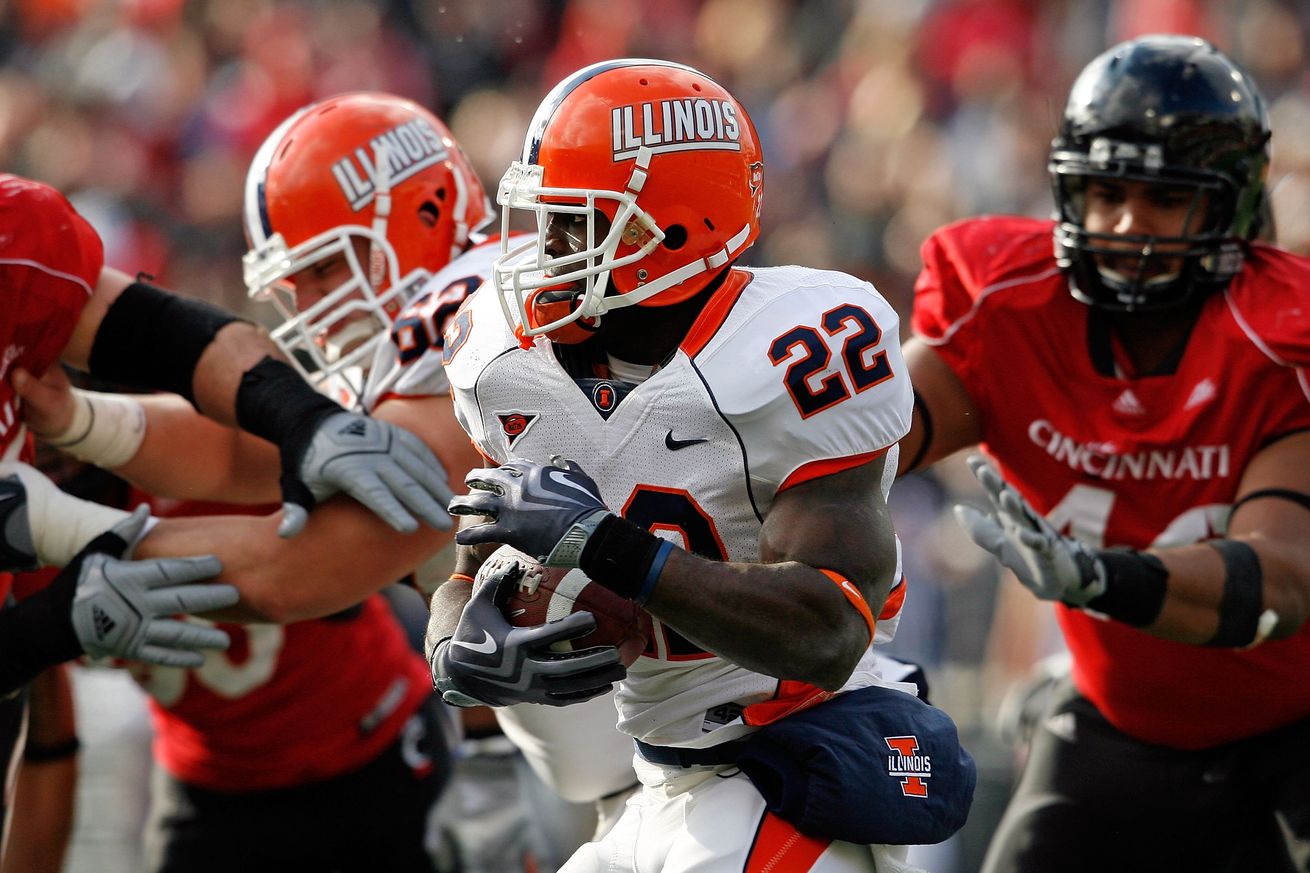 Photo by Andy Lyons/Getty Images
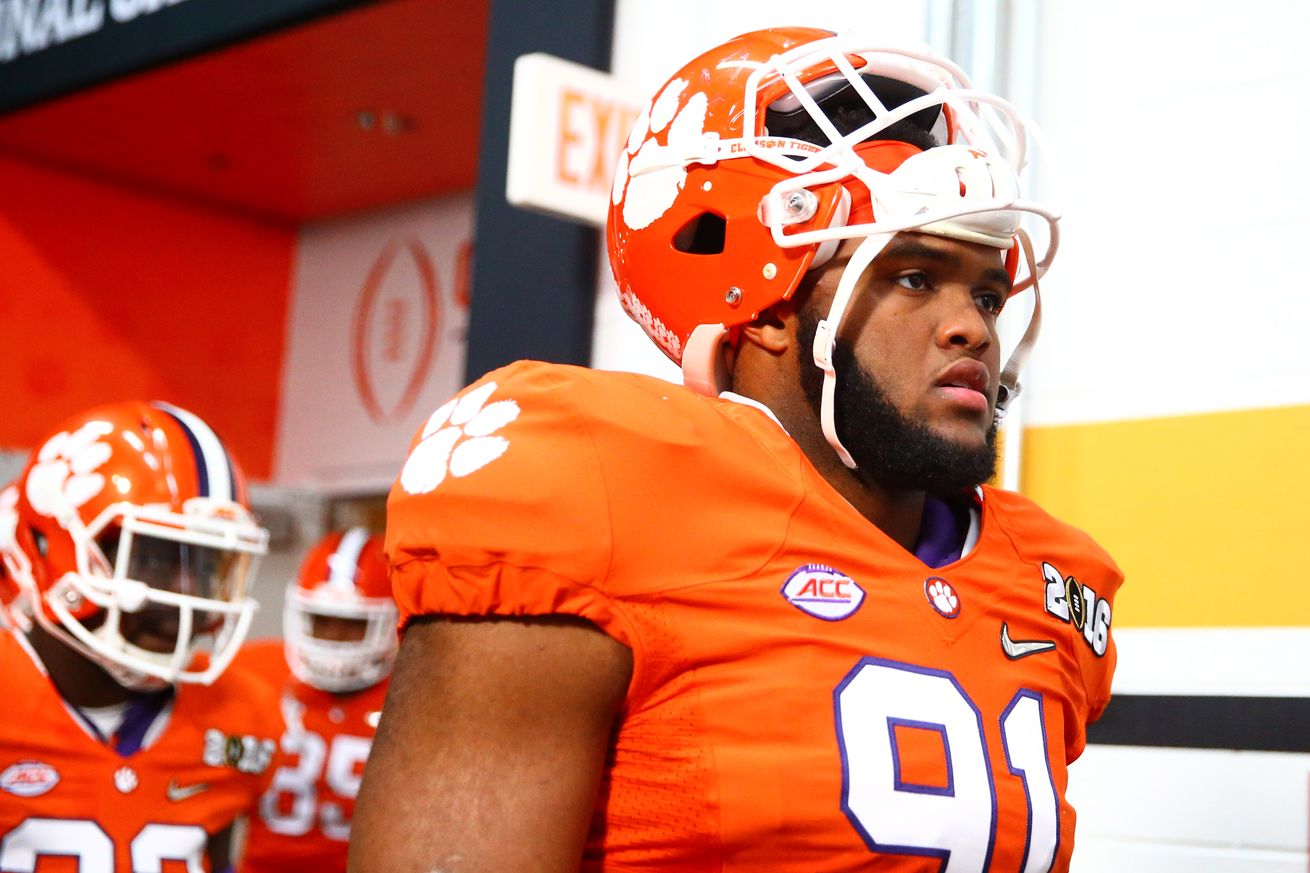 Mark J. Rebilas-USA TODAY Sports
