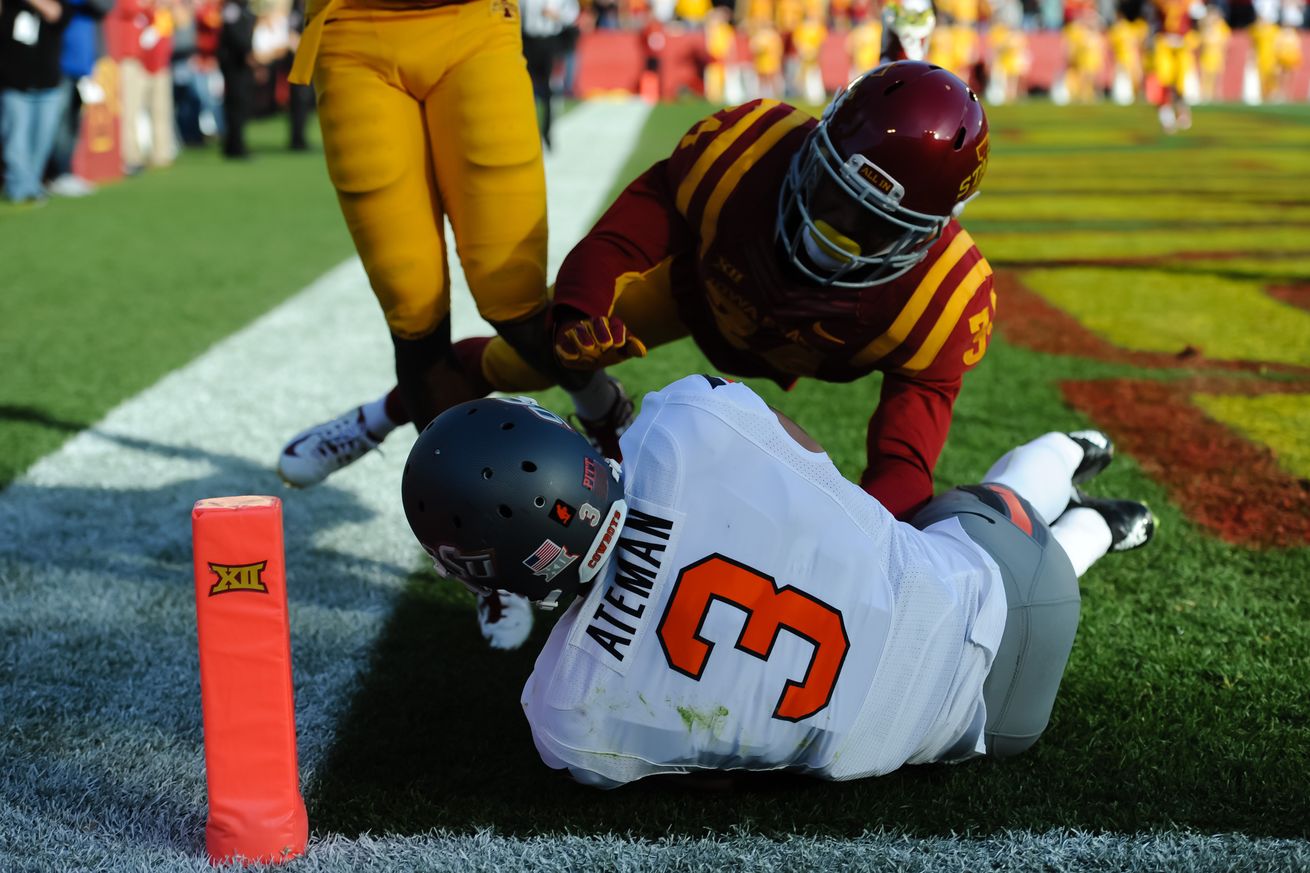
Marcell Ateman to redshirt, return in 2017

The senior wide receiver will take a redshirt, and will be eligible to play for the Pokes next season.

Marcell Ateman will sit out the remainder of the season, and will take a redshirt, Mike Gundy announced in his weekly Monday press conference. A redshirt season in 2016 makes Ateman eligible to return in 2017.

In 2015, Ateman caught 45 passes for 766 yards and five touchdowns. He was poised for a breakout senior year until a foot injury derailed him for what would eventually become the entire season.

Ateman returning for a sixth season is big news for a couple reasons.

James Washington could turn pro after this season.

Washington leaving for the NFL would leave a void on the outside for the Oklahoma State offense. Ateman returning for a sixth season would make him the most experienced player on the team, and a leader for the offense.

If James Washington DOESN’T turn pro after this season, watch out.

The Oklahoma State offense would feature James Washington, Marcell Ateman, former 5-Star LSU transfer Tyron Johnson, Jalen McCleskey, Dillon Stoner, and Tylan Wallace. My goodness. That could potentially be the best wide receiver group, not only in the Big 12, but in the country.

The next few weeks will tell us a lot about the roster for the 2017 season, but one thing we know is that OSU will return valuable experience on the edge. In the Big 12, that matters. A lot.

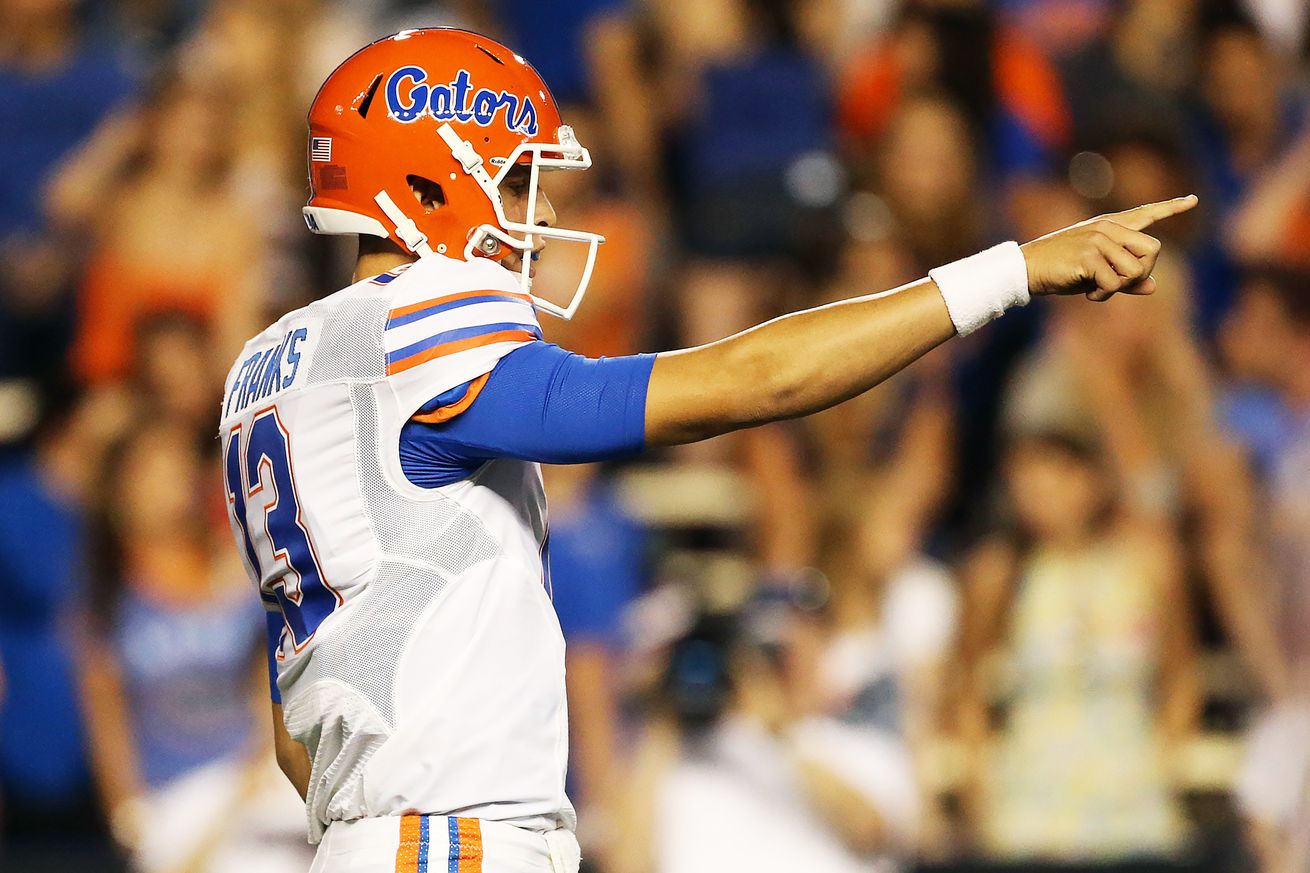
Luke Del Rio’s injury brings Florida, Jim McElwain to the crossroads

Is winning Saturday’s game more important than preparing for more important Saturdays?

Florida fans of a certain age — ones who remember a time before Steve Spurrier being the Gators’ head coach, which I literally can’t — and ones who are aware of history beyond their own time may recall that Richard Nixon once told reporters, bitterly, “You don’t have Nixon to kick around anymore.”

On Saturday, Florida fans won’t have Luke Del Rio to kick around anymore. But as with Nixon — who told the press that in 1962, after a failed bid to become California’s governor, and a decade before he was elected president — there’s a chance that Del Rio could come back to put the lie to those words.

The primary task for Jim McElwain, Doug Nussmeier, and every other decision-maker on Florida’s coaching staff this week is to decide whether they should angle the Gators toward that possibility, or a far more uncertain future.

Two things have seemed unequivocally true about the Gators’ coaches beliefs about their quarterbacks in 2016:

  1. McElwain, Nussmeier, and the rest have started and stuck with Del Rio because they believe him to be the quarterback who gives Florida the best chance to win football games right now.
  2. Those same coaches are committed to finding the best chances at winning football games right now, rather than sacrificing some chance of winning now and pouring some foundation for a possibly brighter future.

I’m not sure how else to interpret sticking with Del Rio not only after Austin Appleby’s underwhelming cameo, but through three games in which he was limited by injuries and threw six interceptions and two touchdowns, and not playing freshmen Feleipe Franks or Kyle Trask at any point.

Florida’s coaches have either shown that they don’t believe that Appleby, Franks, or Trask is better today than even an injured an limited Del Rio, or that their actions run counter to their beliefs. And given how stupid the latter possibility would reveal Florida’s coaches to be — imagine Florida starting Luke Del Rio, whose best game this season was a torching of Kentucky, despite thinking other players were better — I have to think that the former is the truth.

And, really: Starting the best quarterback available makes obvious sense. Florida’s coaches should probably want to win the games immediately before them — the only ones they can prepare for with any degree of certainty about personnel availability and so forth — every week, and Florida should probably be able to game-plan for wins rather than being competitive every week.

Certainly, Florida’s defense has been good enough for the two years of McElwain’s tenure to be able to devise winning game plans that require only a modicum of offense; certainly, it is the expectation of Florida fans that the mighty Gators should be contenders to win every game they play, whether that has any basis in fact or not.

But starting the best quarterback today may not always be the best decision for the long-term prospects of a football program. And Florida must consider that this week.

The Gators still have goals to pursue in 2016. They could win the SEC by winning out, as unlikely as that seems, and there is still enough uncertainty at the top of the rankings to consider the even more distant possibility that a two-loss Florida team coming off consective wins away from home over LSU, Florida State, and Alabama.

Alabama, Clemson, Michigan, and Washington haven’t won their conference titles yet, it’s fair to note — and it’s still possible that the Crimson Tide, Tigers, and Wolverines won’t even play for them. This is college football. The bizarre can be banal.

And given that the much more achievable goal of winning the SEC East — something that requires either Florida sweeping both South Carolina and LSU or the Gators winning one of those two games and Kentucky defeating Tennessee — is also on the table, I think it would have been perfectly logical for Florida to start a healthy Del Rio against the Gamecocks. Poor as his play has been, Florida’s coaches clearly believe he has a better chance of producing a winning level of play than any other option.

Florida doesn’t have a healthy Del Rio, though, and has ruled out the injured version that it still allowed to ride out a terrible performance at Arkansas over Appleby, Franks, and Trask. And the choice before them now — Appleby or Franks/Trask — presents what seems like the clearest possible opposition of motivations for the Gators.

Appleby starting and playing throughout is, I think, the most likely scenario for this weekend. It’s logical — Appleby was Florida’s backup earlier this year, and has far more experience both in his college career and with this team — and easily defensible as a foundation-laying move, because there is value in both keeping a redshirt year intact for Franks and/or Trask and allowing them to play their first snaps in live action in lower-leverage situations than must-win games.

If Florida assesses intact years of eligibilty for both Franks and Trask as more valuable than the experience of playing this weekend or this year, Appleby makes sense as the stopgap, just like Del Rio did and does. If Florida assesses keeping Franks and Trask in competition — as twins in eligibility and experience, rather than as players demarcated as 1A and 1B options for 2017, and set on paths to starter and transferring backup in 2018, by a tipped hand in 2016 — as more valuable than that experience, it ought to start Appleby.

But Florida can’t assess these things in a vacuum. And context suggests this is going to be seen as a binary choice: Winning now or preparing for later.

Appleby’s out of eligibility after this fall, and whatever long-term benefits there are to playing him now are found in his role as a shield for Franks and Trask. If Appleby plays brilliantly, or if he gets hurt or gets shaken — Tebow forbid — by virtue of playing on Saturday, that benefit or detriment to Florida expires about two months from now. (Appleby obviously stands to individually profit from or be diminished by his play, of course — but Florida’s coaches can’t consider just the individual benefits of giving a player a start.)

Florida fans are starved for good quarterback play, after spending the entire decade of the 2010s wanting for a successful successor to Tim Tebow. They — we — have clung to flashes of brilliance, hung on promises of competence, and, increasingly, hoped for something other than woe. Things have gotten so dire that the days of believing in Charlie Weis as the coordinator who would unlock John Brantley’s potential, believing in Jeff Driskel’s growth — before the 2013 or 2014 seasons, you pick — as the key to him delivering on his hype, believing in Treon Harris as a panacea for what ailed a Driskel-led offense, and, finally and most breathtakingly, believing in Joshua Grady as a panacea for what ailed a Harris-led offense, have all become the halcyon moments of yesteryear.

Now, Gators fans pine for the return of Will Grier — who, taking him at his word, made the mistake of not consulting Florida coaches about taking the steroid-like Ligandrol, maintains a real or faux naïvete about why a coach might not want a player who did that to his teammates around, and spins a self-pitying yarn (“I never thought McElwain appreciated anything I did”) to explain why his accomplishments should outweigh his errors.

And that’s if you take Grier’s word — told to a columnist who once decried Antonio Morrison being frivolously arrested for barking at a police dog as part of an “enabling” culture at Florida, yet now seems really, truly, fully devoted to boosting Grier and crucifying McElwain for not keeping a confirmed drug cheat — as the fullest truth. Too many trusted sources have told me too many things for me to do that.

Yet Grier was, undeniably, a flash of brilliance who promised no less than competence, and whose woe was only a result of his self-inflicted off-the-field errors. Even arguing correctly that his positive contributions were limited those five quarters from the end of a miraculous win over Tennessee and a demolition of Mississippi still doesn’t sway Florida fans who want a good quarterback above all else.

And that’s what and who this choice, of Del Rio or Appleby vs. Franks or Trask, is really about, as much as it is Florida’s future as a program.

Trotting Del Rio out on Saturday would have been inviting boos to cascade on Senior Day — from a crowd that will assuredly underwhelm, given the growing fear that Florida might, gulp, lose to a team coached by Will Muschamp, and Del Rio’s injury staving that off is a blessing in disguise. Starting Appleby would at least be something new for the home crowd — he played only sparingly before them against North Texas — even if it seems likely to produce more of the same quality of play.

But starting Franks or Trask could very well energize the Florida fan base.

Many, many Gators fans seem to me to be far more willing to pin their hopes on a future that might be better than a dismal present than to attempt to grind out wins on the margins in hopes of earning the opportunity to be smithereened by Alabama in Atlanta on another Saturday in December.

Many, many Gators fans — generally well-informed, as a whole, despite the presence of pernicious elements predisposed to pessimism, and a lunatic fringe to rival that of any big-league program’s flock — understand that the granitic defense that has been taken for granted for so many years might not actually be there to fall back on in 2017, as a slew of starters depart for the NFL, leaving lesser-regarded, largely untested backups behind.

Many, many Gators fans would be much more excited about 2017 — and its ridiculous home schedule — after a flash of brilliance from Franks or Trask down the stretch in 2016. And many of the recruits who grew up as Florida fans — a dwindling number, given how hard it has often been to root for the Gators since 2010 — might well be excited by that, too.

The window for responsibly starting Franks or Trask probably opens and shuts this week. Starting unprepared quarterbacks at LSU, something Florida did in 2011 and 2015, has not worked out; thrusting a true freshman into the malestrom that will be Death Valley for this hotly awaited Florida-LSU would be nearly malpractice. The same goes for debuting Franks or Trask at Doak Campbell Stadium, or in an SEC Championship Game. If any part of keeping Franks and Trask away from the field until now has been about keeping them free of the keloids that defenders can slash into both mind and body, it makes little sense to suddenly risk them now.

But while the window for starting them probably reopens for a bowl game, Florida could — and maybe should — get a lot more out of burning a redshirt by doing so before a game that, uh, actually matters. There will be pressure on Florida’s starter on Saturday, sure — but he’ll play in a far more forgiving environment than any other one the Gators will inhabit in the near future. And with a showdown with Michigan in Cowboys Stadium looming as another high-pressure situation to begin 2017, it’s probable that Franks and Trask are either going into the fire now or later.

The fans that have supported Florida since 2010 likely lived through the most wonderful nows that the Gators have ever authored. Urban Meyer brought Florida to dizzying heights, ones that set fans’ base camp even higher than Spurrier’s first expeditions of summit-seekers did in the 1990s.

Now, though, we look at those years as then. And we wonder if we will ever see them again. And we want a flash of brilliance, a spark of hope.

Why not try breathing that into existence right now?

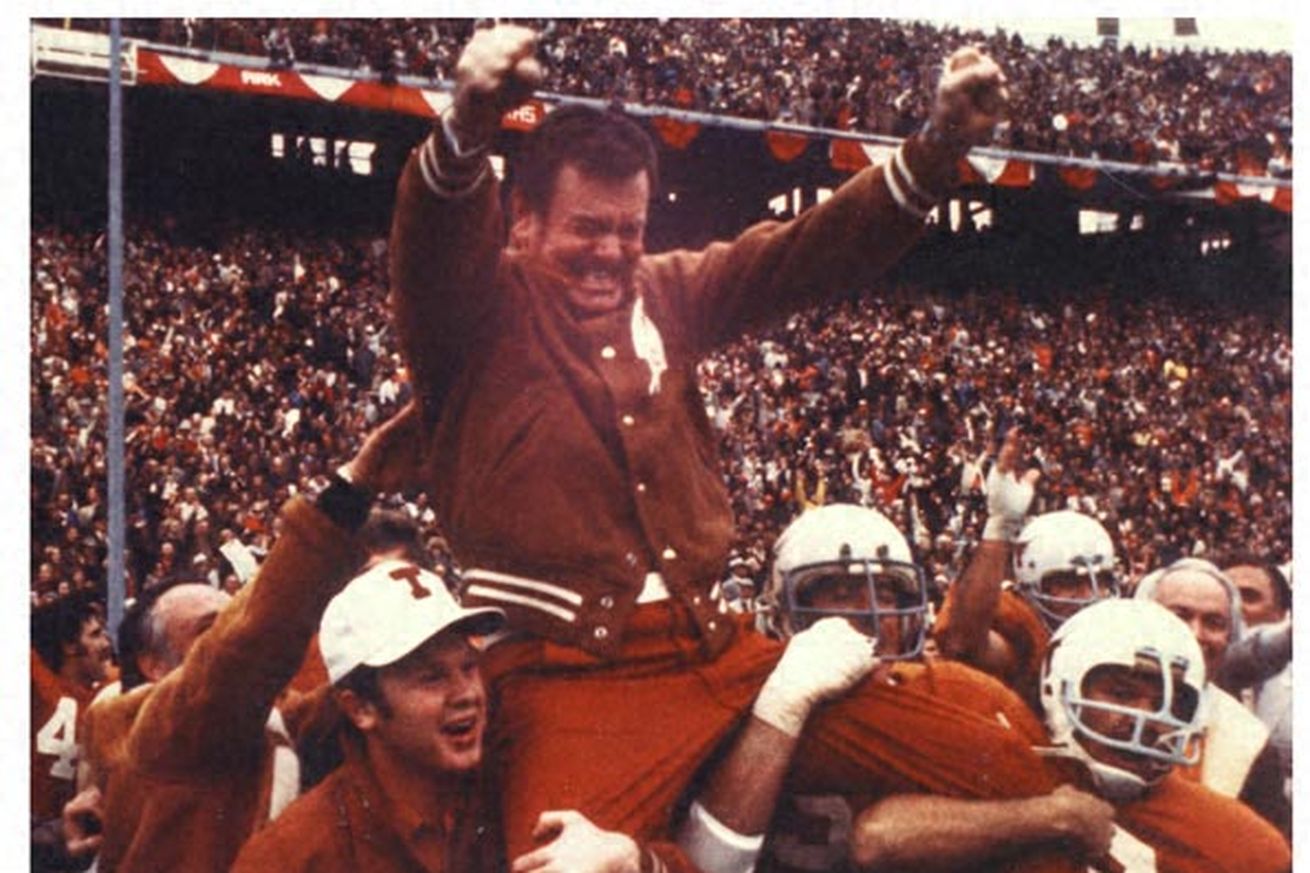
R.I.P. Coach Royal

Four years ago Coach Darrell Royal passed away.

Stanford Rides Defense to Win over Oregon State

Stanford beats Oregon State 26-15, here’s the in depth review

When I played football in high school, there was an unwritten rule that if the quarterback threw for over 300 yards or the running back ran for over 100 yards than the quarterback/running back would feed the linemen on Monday pans of bars or burritos. Just make sure you feed the big guys to put emphasis on the need for them in the trenches to make the rest of the offense work.

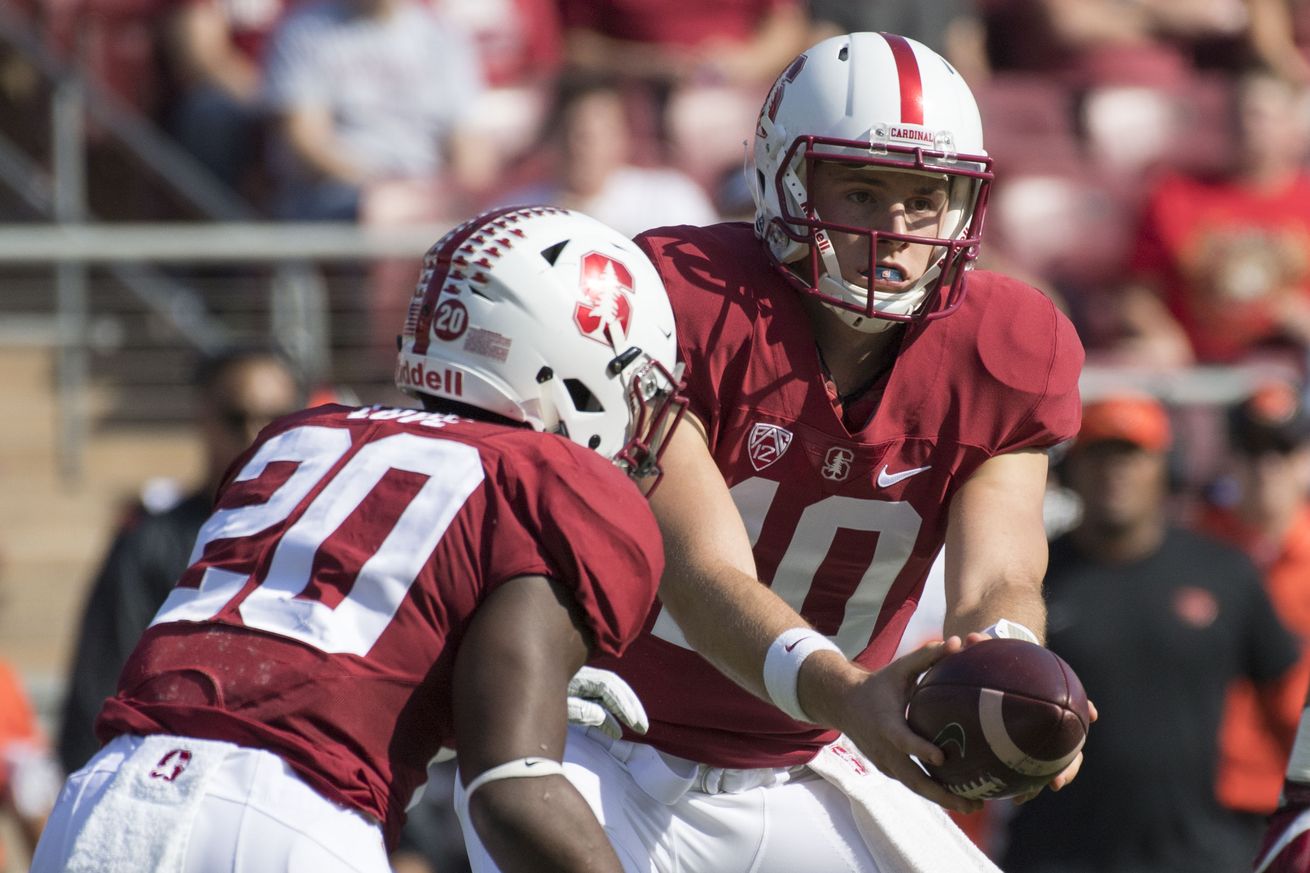
This week the offensive line for Stanford needs to buy McCaffrey’s lunch, as he ran for 199 yards and did not get a lot of help from the line. I will talk about the rest of the game, but this needs to come first because we as fans and viewers of this team cannot miss it. McCaffrey is being wasted, he is absolutely ridiculous as a football player, but also as an athlete. He jumped over two guys in one jump! And they were not even next to each other! He does things that a super hero does in a comic book. But he has a porous offensive line and struggling quarterback. Yes, one can point to plays like the 51 yard dash were there was decent blocking, but for at least half his carries the first man he makes miss is in the backfield. If he had a better performing offensive line and quarterback production, a healthy McCaffrey might have the Cardinal playoff bound, particularly with this defense.

Speaking of the defense, fumbling to start the game is not exactly great and sadly not all that surprising, but the defense set the tone by playing physical up front and forcing the Beavers away from the run and into the teeth of their secondary. The Beavers could not capitalize on the opening fumble and had problems all game long. The Beavers are a run first team and when forced into throwing, the result was two interceptions from a linebacker unit we have not heard much from this season. The Stanford defense did allow some chunk plays but for the most the Cardinal part did a good job bending, but not breaking. Solomon Thomas looked good, the linebackers had some turnovers and my defensive player of the game was safety Justin Reid who came up and made a lot of tackles at the line of scrimmage.

This was a great defensive game for Stanford in which they matched up well and asserted dominance on the line with more guys and more strength. On the outside, the corners and safeties for Stanford could match the speed of Oregon State’s receivers by messing with their timing on the line of scrimmage. Great defensive games back to back as the defense regains health.

On offense there are still plenty of problems, so let us cover the good first. When talking with the Building The Dam website, one of the players I highlighted was Bryce Love. Stanford did a great job getting him involved in the offense and he once again showed that he is a really talented back with lots of speed. I would not be surprised if in the weeks to come Love is lined up in the backfield and McCaffrey in the slot. The running game overall was mediocre, lots of times backs would get hit very early but both are slippery enough to mask those problems.

However, the bigger problem was that it seemed as if Keller Chryst had never taken a snap before. He also struggled greatly through the air and ended with more yards on the ground. The offensive line shares some blame there as well, as they let pressure right up the middle time and again and rarely let Chryst step up in the pocket.

Yet again Stanford won against a lesser opponent because they have two backs, at least one corner and at least one player from the front seven headed to the NFL. Shaky wins for the Cardinal but wins nonetheless.

Daily Round Up: Is The Defense Getting Better?

In case you don’t know, the answer is yes.

The win was sweet. Kris Boyd sealed the game with an interception.

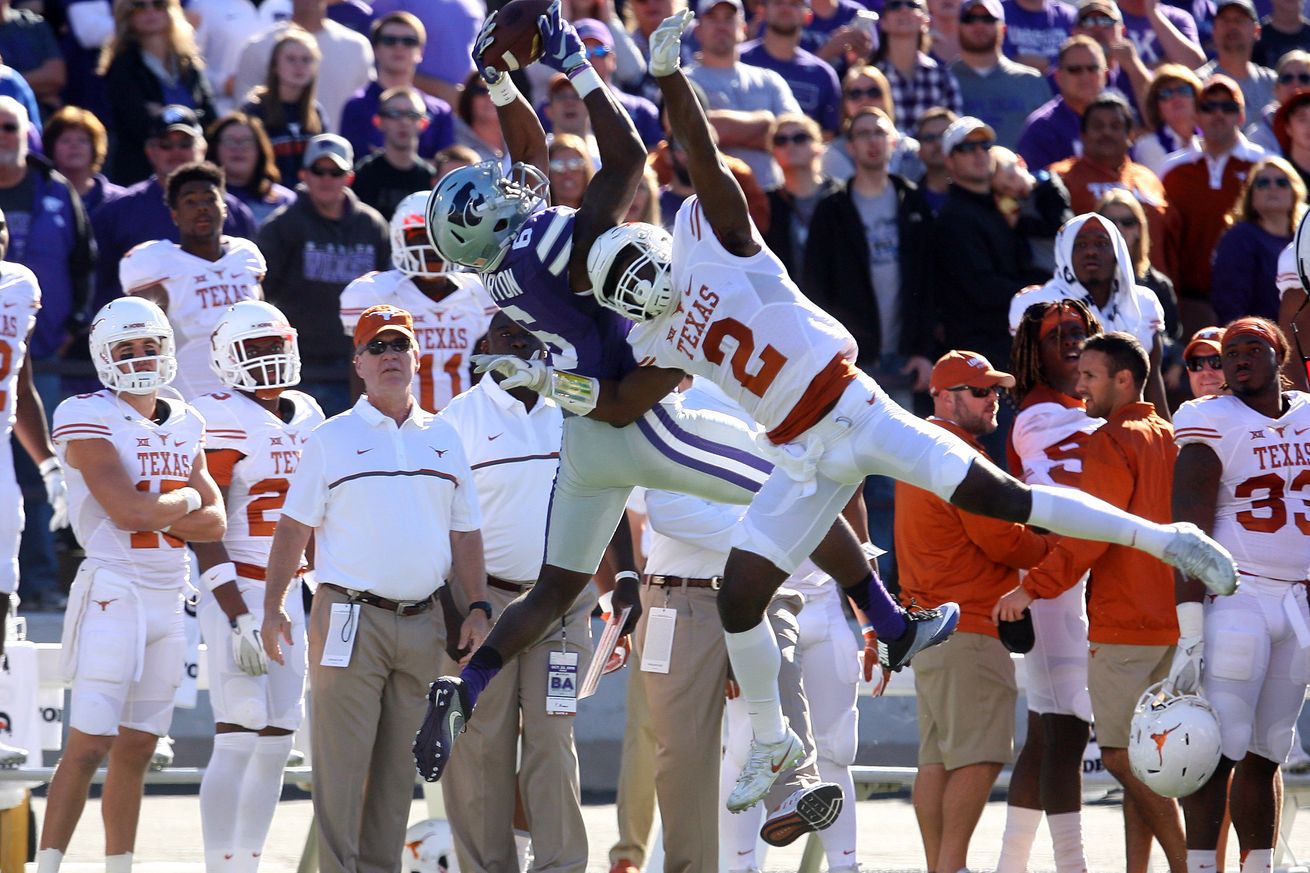
Yes, the defense is getting better. “Texas (5-4, 3-3 Big 12) beat the nation’s sixth-best offense two weeks ago and second-best on Saturday. Next comes a home date with 20th-ranked West Virginia, currently sitting 10th nationally at 510.8 yards per game.”

D’Onta Foreman. That’s all you need to know today. Foreman is now in the Heisman conversation and Fox Sports’ Stewart Mandel has Foreman in his top 5 list.

Foreman has also been the Big 12’s Player of the Week two weeks in a row.

So, Tom Herman is still our top coaching candidate? Good to know…

The men’s basketball team opens Friday against Incarnate Word. They will be missing two important players.

Download the latest The Sidelines podcast to hear an interview with Shaka Smart. Wait until you hear the college football coach that inspires Smart. It’s not who you think it might be.

Read Optional

Baylor fans wore black to show support for Art Briles.

Rape survivor Brenda Tracy joined Newy Scruggs on his radio show. She would like Baylor to cancel their season.

At least he isn’t paid to do hatchet jobs anymore. A sports marketing agency hired Thayer Evans.

This video is analogous to Charlie Strong’s season. Can you guess which one Charlie is and Let us hope the Horns keep winning and Charlie survives. And yes, I’m comparing Red McCombs to a snake.

Now, go forth and VOTE. I don’t care who you vote for, just exercise your right as a citizen and vote.

Column: “Michigan Ain’t Played Nobody”

Something occurred to me this weekend, right around the time Michigan was scoring its eighth touchdown against the Terps – a team that’s, admittedly, in the bottom tier of the conference according to advanced stats, alongside Michigan State, Illinois, Rutgers and Purdue.

Michigan’s opponents are running out. And I don’t just mean physical opponents, or how much time is left in the season. When the Wolverines first entered 2016, the monkey in the room was how Michigan would fare against its rivals. Could they conquer the Spartans and Buckeyes? And, along the way, was the hype real?

The Spartans, for one, are slayed. The hype is indeed real. But there is still another monkey for this team to slay, an expression that’s dogged the Wolverines throughout its dominance.

Michigan ain’t played nobody. Sure, they’ve won, but they ain’t played nobody.

“Michigan ain’t played nobody” is an expression that became popularized by Paul Finebaum and callers to his show, but it’s bigger than that – rooted in the recent success of the SEC and struggles of the Big Ten.

After an October visit by Jim Harbaugh to see five-star prospect Najee Harris in California, Najee received a call from the outside linebackers coach for Alabama, Tosh Lupoi. His message was simple.

He called Harris after Harbaugh’s visit and belittled Michigan’s schedule in the Big Ten, comparing it with the rugged road Alabama must navigate in the Southeastern Conference.

“Every game is the Super Bowl down here,” he told Harris.

This was a smart sales tactic, because Harris craves elite competition. That’s why he savored last month’s nationally televised game against perennial power De La Salle, a 28-21 Antioch loss. It’s also why the college programs still on Harris’ radar are either contending for a national championship (Alabama, Michigan, Ohio State) or play in the Pac-12, the West’s strongest conference (USC, UCLA, Cal).

Michigan’s work ethic is unparalleled; so is the scouting and coaching. But if Harbaugh wants to replace Jabrill Peppers with five more five-stars, he’ll need to prove that Michigan is able, and eager, to win the big battles. Luckily, the Wolverines could be getting a crash course pretty soon, and they have a high-profile season-opener in 2017 with SEC East-leading Florida as well.

Besides Florida and a couple historic showdowns with Notre Dame, though, the non-conference schedule is somewhat underwhelming until 2020, when Michigan plays at Washington and then home against Virginia Tech. In the meantime, Michigan needs to hope that the Big Ten continues its resurgence as one of college football’s toughest conferences – while also winning the big games laid in front of it.

Ohio State is a rivalry game, but it’s also the first chance for this team to prove it can win when all the lights are at their brightest. If Michigan proves itself there, more opportunities and challenges follow in quick succession. Is this team ready? That’s the big test now.

Nooobody. Jim Harbaugh has his own expression about other teams and other people, while Michigan haters have another. Harbaugh’s “Who’s got it better than us?” is meant to motivate his team, to remind them that there’s nothing better than the chance to work to be better. The ability to reinvest your energy into yourself. The chance to control your destiny.

It’s been a strange but effective banner for this program. Winners get to work, losers have to watch. In contrast, ‘Michigan ain’t played nobody’ is dismissive – casually so. A lazy dismissal of Michigan’s work ethic and strength, a perfect epitome of the difference between those who had a hand in its success and, on the other end of the spectrum, those who basely criticize.

It’s a shot across the bow from SEC country, and I’m starting to embrace it more and more every week. Not the belief itself – but the expression, the dislike, the fact that others happen to feel that way. It’s an opportunity, a meme in waiting, a sign that all eyes are on Michigan if and when they do make it in the playoff. Of course, Michigan could fumble once they get there. But they could dominate, too.

NCAA Football: Maryland at Michigan
One of the young’uns: Kekoa Crawford.

With Saturday’s win over Maryland, Michigan is one of only five remaining unbeaten teams. They forced a team that’s leading in the Pac-12 South to crumple under pressure after the first quarter. They have broken through the #2 red zone defense in America, and the #6 red zone defense, and the #9 red zone defense, and the #12 red zone defense, by scoring 19 times in 23 opportunities in the red zone.

They beat three of the top eleven teams in the country, according to S&P+ ratings. They’ve held an All-American running back to the lowest total of his career in games where he got more than one carry, and held another running back who’s one of the top 40 in the country in total yards to 51 and no touchdowns. Who are these people? Who are these teams? Don’t worry, they’re nobody.

Michigan leads all of Division-I in point differential. They’re #1 in the country in scoring defense (10.7 a game), and #3 in scoring offense (48.0 a game). They’re allowing less than 140 passing yards per game. Harbaugh is 19-3 at his alma mater, the best start for a Michigan coach since Fielding Yost.

But if you happen to not respect this Michigan team, and even more if you hate them, and even more if you hope their success is not a hurricane in the making – I say don’t worry about it. I wouldn’t give them a second thought, or change any of my work habits. As we all know, they ain’t played nobody, really.

*Yes, I’m aware I mixed the “elephant in the room” and “monkey on the back” metaphors. It’s what fun people do.
**From 2022 to 2027, Michigan has one game scheduled per year: UCLA in ‘22 and ‘23, Texas in ‘24 and ‘27, and Oklahoma in ‘25 and ‘26. With the emphasis on non-conference schedules raised by the Playoff Committee, the potential benefits in recruiting, and the fan service it provides, Michigan and Warde Manuel would be smart to be a little aggressive here in scheduling more high-profile home-and-homes.

UCLA Achieves Perfect Duality against Colorado

Grading out the finer details of UCLA’s 20-10 loss to the Colorado Buffalo to see if UCLA football is meeting expectations.

Let me start with a definition.

Duality – an instance of opposition or contrast between two concepts or two aspects of something; a dualism.

Why discuss duality? Because UCLA managed to achieve a perfect level of duality in Thursday’s game against Colorado. On one hand, you had the best defensive performance of the year; a level of play that would have been competitive against the best teams in college football. And on the other, you had an offensive performance that would have made some of the worst teams in FBS blush in its awfulness.

Greatness and horribleness. Light and dark. Yin and Yang.

UCLA managed to be at its best and its worst in this game, which is absolutely frustrating to fans. It’s even more frustrating to me, because now I must try and find a perfect balance in this grade. Please don’t hold it against me when the final grade feels higher than it should have been while watching.

1.) Is our defense prepared for each and every team we play?

Raw stats: 304 yards on 85 plays, an average of 3.6 yards per play. The UCLA defense only allowed 13 points (Colorado averages 33.7 ppg), 144 yards rushing (Colorado averages 208 ypg), and 160 yards passing (Colorado averages 266.4 ypg). Oh yeah, and 4 turnovers.

I’ve been saying that the UCLA defense had their best performance of the year against Stanford. That statement now sits in the past, able to gather dust, because THIS was the best performance the defense had all year.

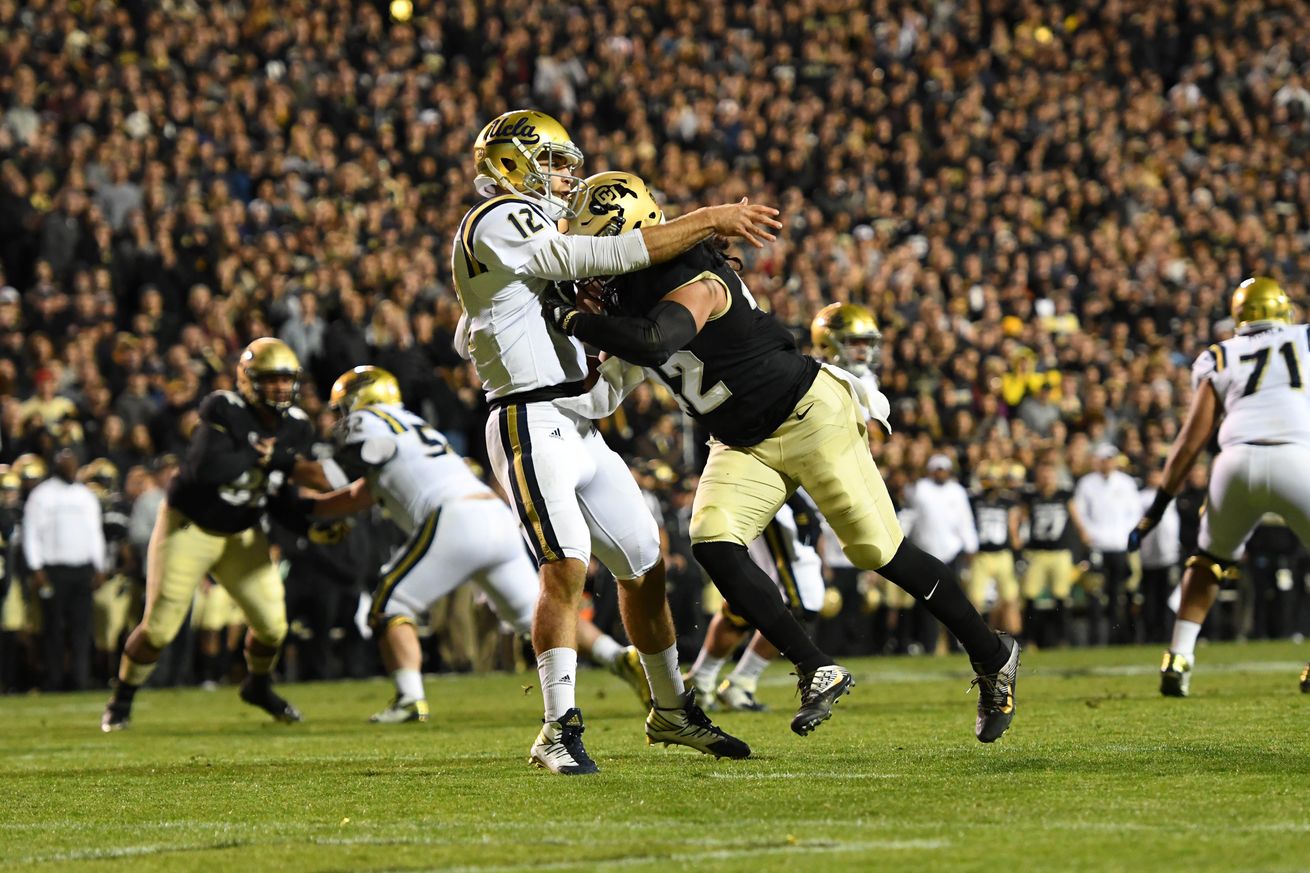
This was just a completely dominant performance at all levels. Let’s start with the defensive line, which had their best performance of the year after struggling against Utah. Colorado isn’t that far off from Utah’s offensive line talent, so this really was a great bounce-back. In particular, Takkarist McKinley made himself a richer man with this game, in which he had a completely dominant performance. Officially, McKinley ended the day with 7 tackles, including 2 sacks, to go with a QB hurry. But the official box score doesn’t include all the plays McKinley affected just by getting into the backfield as quickly as he did. And the box score doesn’t tell you about that forced fumble, which was an absolute beauty of a play from McKinley to beat the right tackle with his speed, and then crush Sefo Liufau, forcing the fumble, then coming back to lay a big block on Jayon Brown’s fumble return. At this point, it would absolutely shock me if McKinley isn’t drafted in the first round, as he’s one of the most ready defensive ends in college football.

And this isn’t to say the rest of the defensive line was chopped liver. Jacob Tuioti-Mariner had one of his best games of the season, and looks poised to take over as one of the next top defensive ends once McKinley and Deon Hollins leave. Eddie Vanderdoes was his usual excellent self, routinely taking up multiple blockers and just being so talented that the opposing offensive line has to overcompensate to account for him. Eli Ankou had his best game of the year, actually popping multiple times on tape. Even the second string, including Boss Tagaloa, Rick Wade, Nick Terry, Deon Hollins, and Kesian Lucier-South, had great showings.

Then you move to the linebacker core, which again had a great bounce-back game. Last year, Jayon Brown had 18 tackles against the Buffalo, so he decided to do one better this year, recording 19 tackles (13 solo), 2 tackles for loss, and a fumble recovery. The easiest way to describe it was Eric Kendricks-esque. Kenny Young as well was back to his season form, recording 7 tackles and being an athletic menace whenever the Buffaloes tried to spread things around. Cameron Judge had an interception, and Josh Woods looked at his most comfortable.

Finally, let’s get into the secondary, which I’ve been critical of in recent weeks. As it turns out, having Nate Meadors back in the lineup definitely makes this unit much stronger. Meadors and Fabian Moreau are maybe the best cornerback tandem in the conference, and it allows Goforth to play back as a safety, where he recorded another interception. Jaleel Wadood, Adarius Pickett, and Tahaan Goodman all looked good in coverage, and even backup Octavius Spencer, who came in for a few reps, looked like he belonged on the field with the rest of the defense.

From a strategy standpoint, this was a clever plan of attack. Colorado has been very balanced this year on offense, but most of that success comes from an effective ground attack from both quarterback Sefo Liufau and running back Phillip Lindsay. The Bruins keyed in on that, limiting the Buffaloes to 2.8 yards per rush, and most of those rush yards were hard earned, as the UCLA defenders typically got into the backfield quickly. From there, UCLA was content to let Sefo Liufau, who isn’t a particularly amazing passer, try and beat them with accuracy and arm strength. There were a few good throws, but Liufau was kept to a robust 4.8 yards per pass attempt (just for reference, against Michigan’s top ranked defense, Liufau threw for 9.8 yards per pass attempt). In addition, the defense was able to bait Liufau into throwing his first, second, and third interceptions on the year.

So yes, this was easily the best performance by the defense on the year. They only allowed 13 points, with two of Colorado’s three scoring drives beginning in UCLA territory. Allowing 13 points in a road game should be enough to win any game. This was an A (4.0), and now the UCLA defense has a new standard to be graded against.

2.) Do we call offensive plays to catch our opponents off guard?

And now we come to our yang to the defense’s yin.

For as great as the defense was in this game, the offense was bad. UCLA had a whole bye week to prepare something, anything on offense, and the Bruin coaching staff used to put together their most conservative game yet. This game was literally a malpractice against all offensive coaching talent.

Consider this stat, which at this point in the season should be a fireable offense: UCLA ran 30 run plays compared to 29 pass plays. When you have one of the nation’s worst rushing attacks, you should be able to recognize the folly of going with a 50:50 pass:rush ratio, simply because you’re actively handicapping yourself.

Now, there is some perverse logic to running so much; according to S&P, Colorado had the 11th ranked rushing defense, and the 12th ranked passing defense. Among their weaknesses (of which there aren’t many) was a relative weakness on standard downs compared to obvious passing downs, and a surprisingly average havoc rating from their front 7. The point is, Colorado is equally good against the run and the pass, but success could theoretically be found by limiting the amount of obvious passing downs you found yourself in, and attacking the front 7. This would, theoretically, require a decent rushing attack to keep your offense on schedule. Notice the word theoretically, because UCLA’s offensive gameplan all year has seemed to rely on theoretical offensive ability rather than scheming to the available talent.

Which is to say: there is no reason to be running that many times at any remaining point this season. UCLA does not possess any of the required pieces for even an average rushing attack, and the continued insistence that they possess that ability is, I assume, baffling to people with even a rudimentary understanding of football.

The strategy employed in this game seemed to believe in two truths – that UCLA possessed a good rushing attack, and that Josh Rosen was still at quarterback and could make the kind of throws that someone with his talent level makes. The first “truth” was obviously a continued issue, but the passing game designs were much more bizarre. You would think that Kennedy Polamalu would have recognized by now that Mike Fafaul does not possess the same skill set as Rosen, and cannot make the same throws into tight coverage. When you combine that with long-developing routes run by receivers struggling to get open, you end up with a bad passing game.

This was bad, and the fact that it made the Arizona State game look good by comparison is maybe the worst part. The infinite monkey theorem states that, if given an infinite amount of time, a monkey hitting keys at random on a typewriter would eventually type up something like the complete works of Shakespeare, but I also believe it would take this monkey much less time to figure out a working offensive gameplan than it takes UCLA’s offensive coaching staff. F (0.0).

3.) Do our players look like they know what they should be doing at all times, and do they execute?

Well, this is an interesting section, to be sure.

Defensively, not much else to say really. Everyone did their job, and as a result Colorado had its worst offensive outing on the year. Pretty simple, really.

On offense, it was more of the same. An offensive line that struggles with the simplest of blocking assignments. A running back that struggles finding holes and being decisive. A quarterback missing throws. Surprisingly, there were only a few truly-dropped passes, but of course one of them would have resulted in a touchdown had Eldridge Massington actually caught the ball.

Really, this section is rather boring to write at this point, simply because it’s boring to write the same thing every week. At least UCLA has achieved a level of consistency in that regard?

The biggest execution issues, outside of the offense, was on special teams, and that’s where the grade for this section is going to take a hit. Normally I’d save special teams discussion for section 4, but considering there are a lot of penalties, I thought I’d move it up here to give this section more #content.

UCLA missed 3 field goals in this game. Well, missed isn’t completely right, because after making his first field goal (for a new career long of 48 yards), his second kick was blocked. The blocking effort on this kick was just poor, especially on the left side, where the Colorado defender came into the backfield unblocked. This affected Molson’s second miss, as the defender on the left side again came unblocked, which forced Molson to rush and push his kick to the right. At this point, Molson was subbed out for Andrew Strauch, who promptly missed his only field goal attempt. Playing musical chairs with the place kickers is awful, especially if you want to build up their confidence. And besides, the bigger issue was on kick protection, as an awful effort in the middle and on the left side forced some rushed kicks from both kickers.

Punt coverage was equally awful, as one would assume when you allow a punt return touchdown. Adam Searl ended up having to make a tackle on another punt, which unfortunately left Colorado with field position deep in UCLA territory. What I don’t understand is, again, UCLA brought in a freshman punter, and they’ve decided to roll with the older player instead of giving the true freshman valuable live reps in an essentially-lost season.

If there was a bright spot on special teams, it would be Ishmael Adams on kick returns, as he averaged 33 yards per return and did his best to set UCLA up for success.

So, with special teams in mind, this would take what would have been a C grade (for an averaged-out execution from both sides) and takes it to a C- (1.7). Sorry defense.

4.) Do our players play disciplined and with exceptional effort for 60 minutes every game on special teams, offense and defense?

A look at the penalties on an individual basis:

4:26, 1st Q – False Start on Andre James. Pretty obvious. UCLA scores on the next play anyway, so this is basically the only penalty that doesn’t actively hurt the Bruins.

2:37, 1st Q – Holding on the punt return by Octavius Spencer. The worst part was that this penalty occurred away from the ball and had no affect on the return. Just a dumb penalty to take, but at least Octavius can take solace in not committing the dumbest penalty by a UCLA player in this game.

14:23, 2nd Q – False Start on Will Lockett. How one commits a false start on a punt, I will never know, but UCLA did manage this feat twice in this game, so kudos for innovating.

9:38, 2nd Q – False Start on Will Lockett. HE DID IT ON 2 PUNTS IN A ROW HOW DOES THAT EVEN HAPPEN?!? Be right back, gonna go sit in the liquor cabinet for a bit.

9:19, 3rd Q – Subsitution Infraction. UCLA was caught off-guard by Colorado deciding to go for it on 4th down, ends up giving up a 1st down with this penalty. Just an A+ job.

2:36, 3rd Q – Face Mask by Deon Hollins. Pretty obvious, Hollins just got caught by a scrambling Liufau and ended up going too high with his tackle, grabbing a solid amount of facemask in the process.

1:43, 3rd Q – Unnecessary Roughness on Jaleel Wadood. Here is one of the dumbest penalties of the day. Wadood makes the tackle, and instead of getting up, he tries to make a point and starts shoving Liufau around while he’s on the ground. UCLA absolutely lost composure on this drive, when they had seemed like the much-more disciplined team up to this point.

0:27, 3rd Q – Unnecessary Roughness on Jayon Brown. Same basic concept. No idea why Brown thought it was a good idea to continue hitting people after the whistle, but here we are.

12:10, 4th Q – False Start on Kenny Lacy. Sure. Why not?

11:10, 4th Q – Pass Interference on Randall Goforth. Of all the penalties, this is the one where the UCLA player had a case for it being a bad call. Goforth played the ball well on a 50/50 ball, and the referee bailed the Colorado offense out. Not sure how much else Goforth could have done here.

6:33, 4th Q – False Start on Kenny Lacy. Yep.

5:27, 4th Q – Holding on Nate Starks on the punt return. I didn’t really see anything on the tape to pinpoint where the penalty actually occurred, but either way it negated a really good return by Ishmael Adams at a point where UCLA needed any bit of luck to get points.

2:40, 4th Q – Offsides. On a punt. God this team is dumb.

13 penalties. 96 yards.

This was, very obviously, UCLA’s worst outing from a penalty standpoint by far. The ironic thing, of course, is that Colorado was by far the more undisciplined team, committing 4 unsportsmanlike conduct penalties and repeatedly giving UCLA’s offense first downs that they wouldn’t capitalize on. But considering UCLA’s own issues, they can’t afford any level of undisciplined play if they want any chance at winning.

But this was, again, an F (0.0). Both teams were undisciplined messes, which made this game an absolute chore to watch even once.

5.) Did the coaches put the team in the best possible situation to succeed?

Well, I’m going to again have to split the difference on the grade here, because again, the defense had their best game of the year as a result of a clever scheme and game plan, while the offense had their worst game of the year for the exact opposite reason.

What is going to affect the grade is, again, special teams, because this was a ridiculously bad game from that standpoint. The jerking around of the kickers is going to get the coaching staff a D (1.0) instead of the C- that the players got, because the players aren’t the ones struggling to put together a coherent special teams game plan.

6.) Do we have leaders on the field?

Yeah, I might have to consider eliminating this section next year, because I’ve really just turned into an individual player highlight section, which is hard to grade.

On defense, the most obvious choice for leader was Takkarist McKinley, and its hard not to see why. He takes over games in a way UCLA really hasn’t seen in awhile. Kenny Clark was pretty good last year at taking over games in the 4th quarter, and other great UCLA defensive players have had dominant showings, but Takkarist McKinley has had multiple games this year where he just took over from beginning to end. Even in the loss to Utah, which was the defenses worst outing of the year, McKinley had a few series where he almost single-handedly stopped Utah from doing anything on offense. McKinley is going to get paid this year, and he absolutely deserves it.

Also, I’ll just highlight the much-maligned Ishmael Adams, who has quietly had a very good run of games with quality return play. It hasn’t been the best season for Adams, who has been dealing with injuries, but people, I think unfairly, focus on the bad returns from Adams instead of noting the overall good field position he has provided, so I’ll do that for him here.

I still want to see someone, anyone, step up on offense, but I have a feeling that the players who could (looking right at you, Jordan Lasley) aren’t given enough opportunity to succeed. So I’ll go with a B (3.0) here.

Grade Card for the Utah Utes:

1.) Is our defense prepared for each and every team we play? A (4.0)

2.) Do we call offensive plays to catch our opponents off guard? F (0.0)

3.) Do our players look like they know what they should be doing at all times, and do they execute? C- (1.7)

4.) Do our players play disciplined and with exceptional effort for 60 minutes every game on special teams, offense and defense? F (0.0)

5.) Did the coaches put the team in the best possible situation to succeed? D (1.0)

6.) Do we have leaders on the field? B (3.0)

Colorado GPA: C- (1.6)

For reference, the previous loss to the Utah Utes graded to a C+ (2.6). The loss to the Washington State Cougars graded at a C (2.1), while the previous loss to the Arizona State Sun Devils graded out to a C- (1.8). The victory over the Arizona Wildcats ended up with a B+ (3.2) grade. The loss to the Stanford Cardinal graded out to a B- (2.7). The victory over the BYU Cougars graded out to a B+ (3.3), while the win over the UNLV Rebels graded out to a C (1.9). The opening loss to Texas A&M graded a bit better at a C+ (2.6), and probably would be higher on review.

That grade is the lowest of the year, which feels right. 8 games in, you’d expect some level of adaptation from an anemic offense, but UCLA just seems like that is a foreign concept.

Oregon State, our next opponent, represents UCLA’s best shot at a win over the final 3 games, and at this point, I’ll say who knows! Maybe UCLA wins, and gains some momentum that they use to upset USC and beat a vulnerable Cal to get to 6-6. I’m not confident in that outcome, but hey, this is college football, and crazier things have happened.

Go Bruins!

NC State depth chart: Connor Haskins replaces Kyle Bambard as starting place kicker

Bambard has kicked himself out of a job.

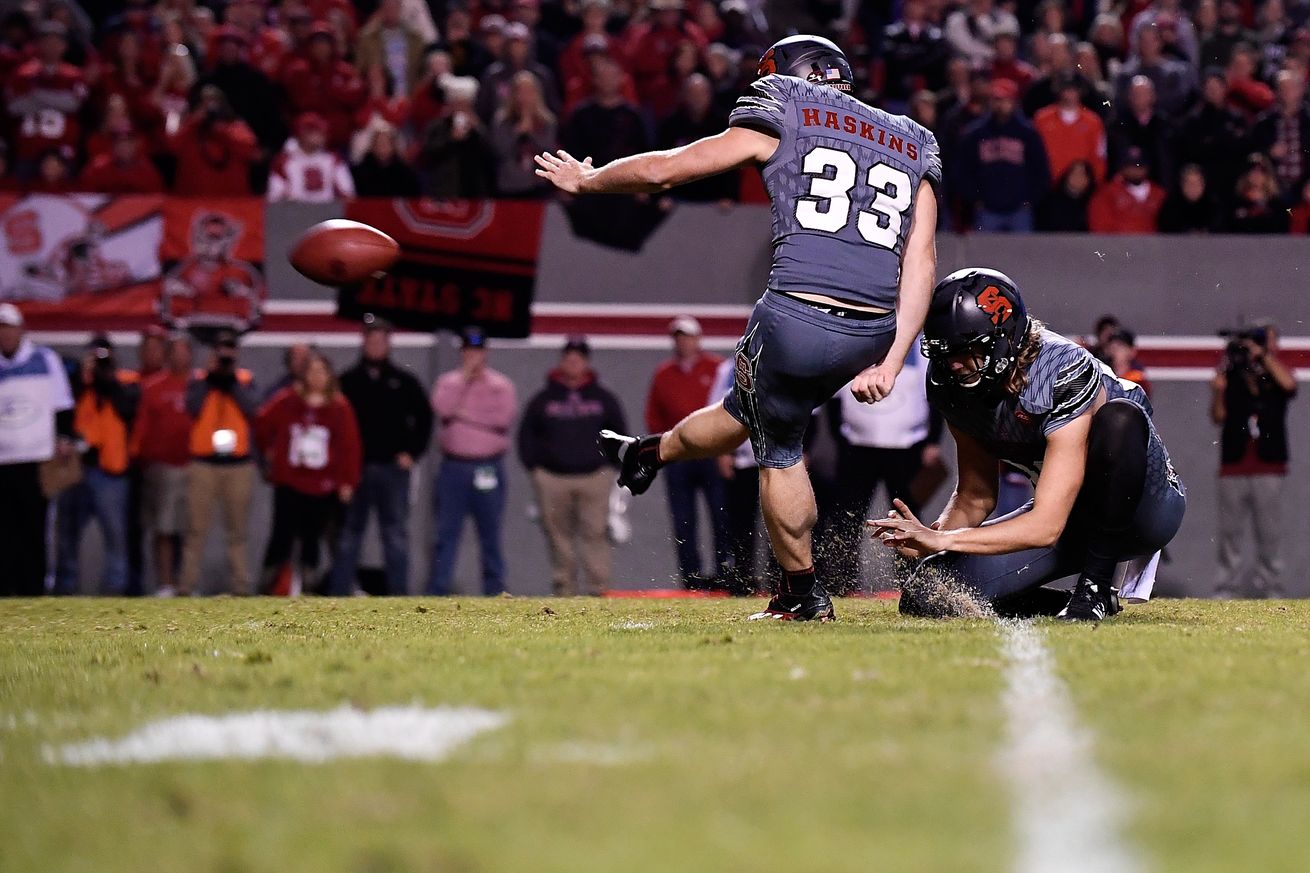
There is one significant change to NC State’s depth chart heading into Syracuse, and it isn’t a surprising one. Graduate transfer Connor Haskins is once again the starting place kicker, replacing struggling sophomore Kyle Bambard.

Haskins replaced Bambard in the Florida State game and made both of his field goal attempts. Those were his first attempts since he went 0-2 against East Carolina and lost the job in the process.

Bambard missed his lone field goal try against the Seminoles, and has missed four of his last five field goal attempts, dating back to his 1-4 performance at Clemson. He is only 2-6 this season on field goals between 30 and 39 yards, which is simply not good enough.

There is little evidence to suggest Haskins can be more consistent, but he can hardly be worse, and should have a little more confidence after knocking home a couple of chip shots against the Noles. And he will be kicking in a dome this weekend.

2018 4-star DT Tommy Togiai earns Michigan offer

The defensive tackle is ranked No. 116 in the 2018 class, according to 247Sports.

Class of 2018 four-star defensive tackle Tommy Togiai has received an offer from Michigan.

According to 247Sports, Togiai is ranked No. 116 in the 2018 class. He is the 10th-best defensive tackle and the No. 1 player from the state of Idaho.

The 6-foot-3, 290-pound athlete has offers from Arizona State, Boise State, Brigham Young, Oregon, Michigan, UCLA, Utah, Vanderbilt, Virginia and Washington.

Togiai currently attends Highland High School in Pocatello, Idaho.

Projection Has Georgia Playing in the Liberty Bowl

Taking on Texas.

Somebody’s got to play in the Liberty Bowl.

SB Nation updates its bowl projections every week, and with the Georgia Bulldogs now sitting at 4-4, the projection is for the team to take on the Texas Longhorns in the Liberty Bowl on Dec. 30.

While not super exciting, it’ certainly not the worst-case scenario. There’s no bowl at all, and worse yet, that game they play out in northwest Louisiana.

Playing Texas would certainly be interesting, especially since that team could be in the midst of a coaching change at kickoff. And Memphis is a pretty nice place.

Would you make the trip?