Why Ohio State lost to Clemson

Abandon all hope, ye who enter here.

Just about nobody saw it coming: 31-0 Clemson was a result that was seemingly barely on the table at all.

The boxplot of performance volatility I posted in the advanced stats preview doesn’t even really capture the offensive performance we saw on New Year’s Eve — Ohio State’s worst bowl loss since 1920 and Urban Meyer’s largest margin of defeat ever as a head coach. In many ways it felt similar to the 2006/7 41-14 National Championship loss to Meyer’s Gators (I’d argue that was worse, but that’s another story) in terms of embarrassment on a national stage.

But now it’s 2017, and Ohio State has the opportunity to dig in to what went wrong against Clemson, make the necessary adjustments, reel in a top-3 recruiting class, and prepare for another shot at the playoff for 2017.

In the table above, scoring opportunity efficiency looks at the average points scored per scoring opportunity — drives with a first down past the opponents’ 40 yard line. Drive efficiency looks at the percentage of drives that were scoring opportunities. The number in parentheses is the number of three-and-outs the offense had. Rushing opportunity rate is the % of runs that gained 5 or more yards. Rushing stuff rate is the % of runs that were for no gain or a loss. Explosive plays are 12+ yard runs and 20+ yard passes here. This table only includes non-garbage time numbers, and I set garbage time at Clemson’s final touchdown with 8:51 left in the game, following OSU’s last interception.

In the advanced stats preview we noted that four advanced stats would matter most:

Rushing opportunity rate. Ohio State has to maintain its biggest offensive advantage — efficient rushing. Without an efficient run game, Ohio State will be forced into obvious passing situations, heavily benefiting Clemson.

Ohio State’s sacks allowed. The biggest mismatch for the Ohio State offense — outside of the passing game overall — will be the offensive line in pass protection against Dexter Lawrence and Christian Wilkins. It’s unlikely that Ohio State will win allowing 6+ sacks again.

Interception margin. Deshaun Watson will find some success passing — he’s too good not to, no matter what secondary he’s facing — but the key will be creating at least one interception. Malik Hooker, Marshon Lattimore, and Gareon Conley have to play their absolute best against this loaded Clemson passing offense.

Wayne Gallman’s rushing success rate. For Ohio State to slow the Clemson offense down, they’ll need to completely remove Gallman from the offensive gameplan. As good as Watson is, stopping the run should be the first goal. Ohio State has to force Clemson to doubt whether they can rely on Gallman to pick up critical short yardage — and as it is they’re 86th in power success rate.

Ohio State defense: Stopping Gallman and forcing turnovers

Key stats:

  • Defensive stuff rate 24% (41% including 1-yard gains)
  • Defensive explosive play rate allowed: 12%
  • Third down %: 47%
  • Gallman rushing success rate: 44% overall, 22% in the first half
  • Overall explosive play ratio: 9:2, in favor of Clemson

Probably the biggest key I saw was stopping Gallman, making Clemson one-dimensional, and then forcing turnovers. Those three things were all interrelated based on Clemson’s worst performances this year — while Deshaun Watson is obviously prolific, I wasn’t confident in the Tigers’ ability to consistently move the ball without an efficient ground game.

For a quarter and a half — until Clemson started their 8-play, 83-yard drive with 6 minutes left in the first half — the Ohio State defense stayed on script. They’d forced two interceptions out of Watson, including one on his first throw of the game, and Wayne Gallman even ended the half with just 22 yards on 9 carries (2.4 yards per carry) with only 3 carries of 5 or more yards. If you add stops for just 1-yard gains, the Ohio State defense had a 41% stuff rate, which is even higher than the Buckeyes’ country-leading average. Until the game was essentially decided, the Clemson run game was held in check.

But then two things changed that ended up leading to all of Clemson’s four touchdowns. First, the Tigers had two touchdown drives that began in Ohio State territory (and another that ended in a missed field goal). Clemson had about a 5-yard field position advantage over the course of the (non-garbage time) game. The reasons for Ohio State’s field position disadvantage were varied — sometimes they were due to turnovers (like following Van Smith’s 86-yard interception return) and sometimes they were due to poor offensive drives that simply failed to move the ball down the field.

Second, Deshaun Watson and his limitless supply of elite receivers created explosive plays. Clemson’s opening field goal was spurred by a 37-yard Mike Williams catch-and-run. Their first touchdown included a 26-yard Williams reception too. Their second touchdown had a 33-yard Watson run as well as a 30-yard wheel route touchdown. Their third quarter touchdown drive, which started at the Ohio State 40, had a 17-yard Watson run followed by a quick 12-yard run by Gallman. Their final touchdown drive started at the Ohio State 7-yard line, so an explosive play wasn’t even possible.

The 2016 Ohio State defense was excellent — probably the best in recent memory — and the Fiesta Bowl was their first time allowing over 30 points in a game this season. The field position issues certainly weren’t on the defense. But while we expected a certain number of explosive plays allowed — after all, Clemson averaged an explosive play in one of every four snaps this season and Ohio State — we couldn’t have really expected the Tigers to essentially maintain their explosiveness with a 21% explosiveness rate.

Ohio State offense: Negative plays and turnovers

Key stats:

  • Rushing stuff rate: 31%
  • Rushing success and opportunity rates: 50%
  • Overall negative play rate: 22%
  • 3rd down rate: 17%
  • 3rd down average yards to go: 8.25 yards
  • Scoring opportunities/total drives: 4/12
  • Three-and-outs/total drives: 4/12

Anyone who follows college football could’ve told you that Ohio State’s passing game could’ve been a liability against Clemson. Ohio State had the 54th-ranked passing attack by passing S&P+ and was 90th in passing success rate entering the game. But I thought sacks allowed and overall interception margin between Watson and Barrett would be the two keys, along with maintaining their seemingly decisive advantage in efficient running. Ohio State went 0/3 in these three metrics.

First, both Watson and Barrett threw two interceptions. Watson’s first came on his first throw, giving the Buckeyes the ball on the Clemson 33-yard line for their first scoring opportunity of the night (which ended in a missed field goal). His second came in Ohio State territory on a 3rd-and-7 just inside the scoring opportunity range. Essentially the only costs to those turnovers were missed opportunities for the Clemson offense.

Both of Barrett’s second-half interceptions came inside a scoring opportunity. One was on the Clemson 27 and the other was a 4th-and-27 on the Clemson 33. While the second pick came on a play with a low probability of success anyway, it resulted in the 86-yard return and resulting score, which ended up icing the game for Clemson. While the score sheet shows a push on interception margin, it’s easy to make the case that Ohio State’s interceptions were more costly than Clemson’s.

Second, and third, Ohio State allowed an absurd number of negative plays. We expected this for the passing game. Clemson ranked 4th in both overall havoc rate and adjusted sack rate, while Ohio State ranked 79th in adjusted sack rate on offense. The right side of the line in particular was prone to allowing pressure on passing downs. But while pressure on J.T. was a problem, Clemson only managed three sacks on the night. Going by Ohio State’s other season-long offensive trends, that wouldn’t be enough to sink the offense.

Instead, the real problem was that the offense allowed an absurd number of tackles for loss in the run game. All told, 10 of Ohio State’s 45 non-garbage time snaps were for a loss and nearly 13 of their rushing plays were for no-gain or a loss. That’s completely counter to season trends for both teams — and the biggest surprise factor that cost the Buckeyes the game. During Ohio State’s regular season, which included games against tough defenses like Michigan and Wisconsin, Ohio State was third in the country in stuff rate allowed, at just 12.6% of runs. They were second in opportunity rate (5+ yard runs) at 47.8%. Clemson, meanwhile was just 39th in stuff rate at 21.2% and 12th in opportunity rate at 32.5%. So in the Fiesta Bowl, Ohio State’s stuff rate was 146% worse and Clemson’s was 46% better than their season averages.

Rushing efficiency overall wasn’t the problem — it was inconsistent line play and play calling that led to the disastrous rushing performance. Looking at the overall rushing success rate (which looks at progress towards first downs: 50% on 1st, 80% on 2nd, 100% on 3rd) and opportunity rate, Ohio State averaged 50% efficiency in both stats. That’s a little below their average rushing success rate and a little above their average rushing opportunity rate on the season. But negative plays and the early deficit led to just 21 runs the entire game, and only 5 for Mike Weber. On standard downs, the Buckeyes typically run 64.7% of the time — against Clemson, they ran just 39% of the time total.

As a result, the Buckeye offense was behind the chains and behind the scoreboard nearly the entire night. In non-garbage time, they averaged 8.25 yards to go on third down. Even if you take out two outliers due to penalties (of 17 and 18 yards to go), they still averaged 6.4 yards to go on third down. Ohio State is not built to convert third and longs — they ranked 74th in passing downs success rate — which is why rushing and standard downs efficiency was so important. But when 9 of 12 third down attempts were with 5 or more yards to go, this offense didn’t really stand a chance.

So all in all, the Buckeyes managed just 45 non-garbage time plays. 10 of those plays, or 22%, were for a loss. They had 12 offensive possessions in that time — four were scoring opportunities (which went: missed field goal, missed field goal, interception, interception), and four were three-and-outs.

What now?

The offensive staff has a lot to think about over the offseason. The passing game has had two years of regression — from second in passing S&P+ in 2014 to 26th last season, to 54th this season before averaging 3.8 yards per attempt against Clemson. The offensive line has replaced multiple starters in each of the last three years but has still been a strength of the team, but couldn’t handle elite pass rushers this season. Wide receivers often failed to get separation despite their elite speed. And the team was overly reliant on efficient running, without the ability to quickly come back from a deficit or effectively generate explosive plays.

But there is a lot of reason for optimism, too — certainly enough for Buckeye fans to be optimistic heading in to 2017. The Buckeyes are likely going to have a senior starting quarterback. The offensive line will be largely intact, and buoyed by a few key recruits and healthy players. They’ll actually return some experience at wide receiver (the Buckeyes had the lowest returning experience of any Power-5 team this season). The secondary might lose a number of players early, but will at least get an infusion of freshman talent on signing day. So there are strong reasons to like the Buckeyes’ chances of a repeat playoff appearance next season too — and hopefully with better results this time around.
Jake Venables Commits to Clemson

2018 LB Jake Venables (6’1, 210) of DW Daniel HS, SC just committed to the Clemson Tigers. Venables is the son of current defensive coordinator Brent Venables. This should not be how he is defined as a player, however. Jake Venables is a legit Division One caliber athlete. He had committable offers from Texas Tech, Northwestern, and SMU, in addition to Clemson. Venables is ranked as a composite high 3* prospect and number 387 overall (the four stars cut off at number 311).

What they get: Venables plays with good technique. He plays as an OLB at Daniel and shows solid positioning in pass coverage. Understands where he needs to be and body positioning. He strikes hard at the point of attack and doesn’t hesitate to wrap-up and drive through a ball carrier. He possesses good length and wingspan for the LB position. He diagnosis plays well and usually takes solid angles to the ball. He has worked to add strength this past year, putting on good size during his junior year.

Off the field, there is nothing to dislike. Not a thing. Works hard in the classroom, on the field, and will be a positive contribution to the locker room (I mean that seriously, he is a grinder and already a beta-Power Ranger, just a quality young man). This should not be considered a ‘charity’ offer in any way. The easy comparison is to Spencer Shuey, and I do think his career trajectory could follow Shuey’s, but Venables has a bit more length (different body types) and better technique than Shuey at this point.

What does he need to work on? The 4.6 40 time is generous. He will need to improve his sideline to sideline speed. At the high school level he is instinctual and can get away with a lack of speed but it will need to improve in college. He also isn’t a very quick twitch athlete. He needs to work on being more explosive in short spaces. This doesn’t impact his tackling or tackling form, where he shows good strength and explosion, but his change of direction in short spaces will need to improve. Unless this improves, he will need to stick inside and gain another 10-15 pounds.

The other added bonus is that Brent Venables might want to stick around a little longer to coach his son. This doesn’t mean that anything is set in stone, but it doesn’t hurt either. Congrats to Jake Venables and the Venables family.

Arizona football recruiting: 3-star linebacker Colin Schooler receives his offer

Schooler has now become a priority for the staff

The Arizona Wildcats lost out on one of the top JuCo linebackers in the nation after Delshawn Phillips flipped to Illinois after taking a visit a few days before.

Now the staff will be looking to fill the need at the linebacker position, which doesn’t have a whole lot of depth as we look to the future.

To address the need, an offer went out to Colin Schooler, a product out of Mission Viejo, California. He checks in at 6-foot-2, 215 pounds, and holds offers to Fresno State, Nevada, and New Mexico. He is also hearing from UCLA, Utah, and USC could be on the verge of offering as well.

“Coach (Marcel) Yates has come to my high school a few times and he is the main guy who started to recruit me,” Schooler said about his communication with the staff. “He said he liked my film and liked the way I played. Said he liked my game a lot.”

When I spoke to Schooler, it had been just a few days before he was officially offered. When we spoke he said that he is hopeful to see an offer during an unofficial visit he is planning to take in January.

“I really like Arizona because it is a college town,” he explained of what draws him to Tucson. “It’s the only show in town, not like Phoenix, no pro football, hockey, basketball or baseball.”

The family has also been interested in the program as well. Schooler’s older brother, Brenden, was waiting for an offer from Arizona last year, but it never came his way. Instead, he took an offer to Oregon where he started ten games as a true freshman, leading the team in interceptions with four and finishing third in tackles with 74.

The younger Schooler’s recruitment has been heating up ever since his high school season ended. Now with the dead period in full effect, he’s going to have to move quickly before National Signing Day. He has a few visits that he is trying to set up right now.

“I am looking for the right fit,” he said about his decision process. “The feeling that I could spend the next 4-5 years of my life there. This is what is going to set the rest of my life, so I don’t want to just go anywhere because of a name or anything like that. I am looking forward to the interaction with the staff and meeting the players to ask them what they think of UA.”

Schooler will be in Tucson on January 14 for his visit and he will make a decision after he takes his final visits before National Signing Day.

At Mission Viejo, Schooler carried the ball 101 times for 1,161 yards and 19 touchdowns. On defense, he finished with 77 tackles, two sacks, and two interceptions.

Louisville RB LJ Scott will transfer

Louisville running back LJ Scott announced on Instagram Sunday morning that he will finish his college career somewhere else.

Here was his message:

Three Years Ago God Placed Me Here, The University Of Louisville, To Fulfill A Purpose. To Not Only Touch Lives But To Open My Heart And Allow Mine To Be Touched As Well. To Not Be Good But To Be Great In All Aspects Of Life. And Most Importantly To Not Be Successful But To Be Significant. My Time Here Can’t Be Measured In Any Stat, Or Any Accolade. But Rather In The Smiles, Laughs, And Tears Shared With People God Has Blessed Me To Run Into.

The Lessons Learned Here Have Made Me The Man, Friend, Partner, Son, Brother, And Child Of God I Am Today. I Can’t Thank Everyone Who Made My Time What It Was Here Enough! Three Years Of Memories I’ll Recall For A Lifetime.

This Is Bittersweet, But God Is Calling Me To Fulfill Another Purpose Elsewhere. So To The University Of Louisville, The City of Louisville, The Friends and Fans Of Louisville… Thank You! Thank You For Sharing What Is Yours With Me And My Family For The Past Three Years! We Are Humbled And Honored To Have Called Ourselves Cardinals!

Scott’s best game as a Cardinal came in the second week of his freshman season when he rushed for 126 yards and one touchdown on 11 carries in a rout of Murray State. Lingering injuries then kept him from making much more of an impact on that season. After splitting time between running back and fullback as a sophomore, Scott registered carries in just two games as a junior for U of L in 2016.

Best of luck to L.J. wherever he chooses to finish his career.

Report: Wisconsin LT Ryan Ramczyk to have hip surgery post-Cotton Bowl

If McGinn’s report is true, how does this affect the All-American’s NFL draft stock?

A Wisconsin All-American and potential NFL first-round draft pick could have surgery after the Cotton Bowl, according to a report.

The Milwaukee Journal Sentinel’s Bob McGinn reported on Saturday evening that left tackle Ryan Ramczyk “will undergo arthroscopic surgery to repair a torn labrum in his hip” after UW’s Jan. 2 match-up against the undefeated Western Michigan Broncos (h/t Zach Heilprin, Tom Oates). McGinn received the information from some NFL teams’ personnel.

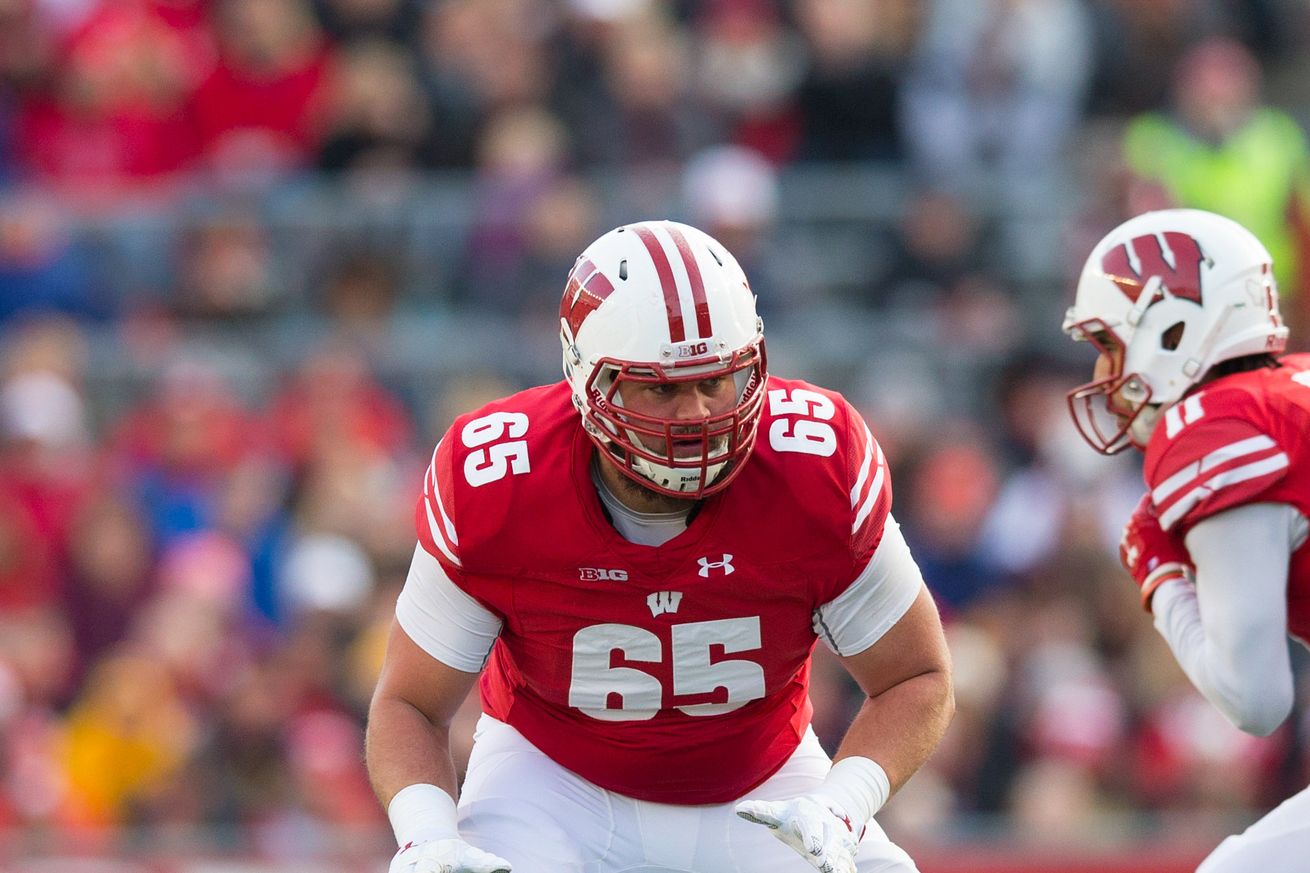
Ramczyk jumped in and excelled at the left tackle spot for Wisconsin’s offense in 2016. The 6’6, 314-pound redshirt junior was honored as a consensus first-team All-Big Ten selection, then was selected as a first-team All-American by Pro Football Focus, Sports Illustrated, Sporting News and USA Today. He also received a Walter Camp second-team All-American honor nod.

Here’s the full post about Ramczyk from McGinn’s article:

Probably the next left tackle is Wisconsin junior Ryan Ramczyk (6-5, 315), who stunned scouts by playing extremely well against Louisiana State in his major-college debut. He played for UW-Stevens Point in 2013-’14 before red-shirting at UW last year.

“LSU has good edge guys and I was saying, ‘Who the heck is the left tackle?’” said another scout. “He matches up with people stride for stride athletically. I was shocked.”

Ramczyk, according to teams, will undergo arthroscopic surgery to repair a torn labrum in his hip after the Badgers’ bowl game.

“It’s a four-month (injury),” said one scout. “He’s very talented. I think he will come out. He’s deciding that right now.”

There was a question if Ramczyk would leave a year early, though many thought he would declare for the NFL Draft after his impressive season. There’s been talk of the Stevens Point native being a first-round draft selection. Pro Football Focus even listed him as going to the San Diego Chargers at No. 10 in their mock draft this month.

As both Heilprin and Oates noted if the report is confirmed, Ramczyk would presumably miss the NFL Combine, Wisconsin’s pro day and any pre-draft workouts — all of which could increase his stock further.

5-star RB Cam Akers shouldn’t be scared off by Ole Miss’ new offensive coordinator

Phil Longo’s Air Raid offense isn’t as pass happy as you think, and he’ll be more than willing to feature a star running back.

If you’ve read anything in the last few days about new Ole Miss offensive coordinator Phil Longo, you’ve seen a lot of references to the Air Raid offense, the pass-obsessed system that’s taken over the Big 12. Longo describes himself as “100 percent Air Raid when it comes to the philosophical approach to throwing the football” and lists Mike Leach, the architect of the system, as his most significant professional influence.

That could all be of particular interest to one Cam Akers, the best recruit in the state of Mississippi and the No. 1 running back prospect in the country. Akers is being recruited by run-heavy teams like LSU, Ohio State and Florida State, and the concern among Rebel fans is that he’ll be turned off by Longo’s Air Raid offense. Bagging Akers is the top priority for Hugh Freeze in a year in which the NCAA investigation has trampled Ole Miss’ typically productive recruiting (the Rebels’ 2017 class currently ranks 47th).

So will the new coordinator hire push Akers away from Ole Miss? Not if he takes the time to learn about Longo’s system.

For starters, Longo’s offense is more balanced than a typical Air Raid.

“In the passing game, I 100 percent believe in that philosophy [of Leach and Texas Tech’s Kliff Kingsbury] throwing the ball. I think they’re as good as anybody in the business throwing the football,” Longo told 247Sports on Friday. “Probably the biggest difference is that there is a very physical downhill run component to our offense.”

Longo, who spent the last three seasons as the coordinator of FCS power Sam Houston State, threw the ball on 55 percent of his plays in 2016, which would have ranked as the 18th highest rate in the FBS this season (though still considerably lower than the 62 percent rates of Leach and Kingsbury). But that was with superstar quarterback Jeremiah Briscoe on the roster. In the two previous seasons combined, Sam Houston State passed only 41 percent of the time, which would have ranked all the way down at 97th in the FBS this season—just in front of Alabama.

In both 2014 and 2015, Longo’s offense ranked top 12 among FCS schools in rushing attempts, rushing yards per game and yards per carry. He’ll undoubtedly make sure Akers sees those numbers.

Longo will be willing to change his offense for Akers.

Not as a recruiting ploy, mind you, but as a practical adjustment. Longo has described his offense as a puzzle with square pieces, a system in which the components can be moved around fluidly to adjust for personnel strengths.

“It’s designed to be more flexible so that regardless of our talent base we have the flexibility in the offense to promote the more talented players,” he told 247Sports. “There are games we run the ball 70 times to win it and games where we throw 70 times to win it. I’m perfectly willing to do either …”

If Akers is half as good as he’s expected to be, Longo will be more than willing to tailor his offensive strategy to feature a star running back.

True, Longo never featured a back at Sam Houston State. In 2014, he gave the majority of carries to dual-threat quarterback Jared Johnson. In 2015, three of Longo’s running backs had at least 100 carries but none went over 200. With Briscoe doing the heavy lifting through the air this season, the Bearkats’ top two backs averaged about 11 carries apiece per game.

But Longo has also never had a back as talented as Akers.

Akers could do well in a power spread.

Longo will tweak his offense to promote Akers, but it’s not like he’s going to start running out of the I-formation 30 times a game. The Rebels will be a spread offense that includes a former No. 1 quarterback recruit and a loaded receiving corps, and they’ll do plenty of passing. But while those things initially sound like negatives for a running back, Freeze and Longo can sell them as positives. Longo’s offensive philosophy is predicated on the notion of “chasing space,” or attacking a defense where it has fewer bodies. When defenses back up or play the edges against Ole Miss’ spread passing game, space will open up on the interior for Akers.

“That’s definitely attractive,” Akers told 247Sports before Longo’s hire. “Having weapons around you as a running back, you always want that. Somebody who can spread the defense out, open the box up a little bit with good receivers and a good quarterback. And they’ve got the same offensive line coming back, I think.”

One hitch in all of this is that we’re currently in the middle of a recruiting dead period that runs through Jan. 11, which means Longo won’t have a chance to speak face-to-face with Akers before his expected commitment at the U.S. Army All-American Bowl on Jan. 7. But the dead period does allow for coaches to communicate with recruits over the phone, which will give Longo a chance to develop a relationship and explain his system.

The Rebels still face an uphill battle for Akers.

No matter what Longo changes in Oxford, Ole Miss’ offense still won’t be as appealing to a running back as the units at LSU, Ohio State and Florida State, all of which ran the ball less than 47 percent of the time in 2016. The Buckeyes have an alum tearing his way to NFL Rookie of the Year and the Tigers and ‘Noles will have running backs drafted in the first round come April.

“A lot of Ole Miss’ recruiting pitch to Akers is based off of emotional appeals,” Hugh Kellenberger of The Clarion-Ledger said earlier this week. “‘We are the ones that have been recruiting you the longest. We are the ones that are inside Mississippi. Be a Mississippian, be a native son that goes to a state school and does great things…’

“But they’re having to play catch-up on the practical appeal. LSU and Florida State I don’t think have near the same sort of emotional appeal, but they are far ahead of Ole Miss on a practical level.”

If Ole Miss doesn’t sign Akers, though, it probably won’t be because of Longo’s hiring. Assuming his philosophy is effectively communicated to Akers, Longo won’t hurt the Rebels’ chances. If anything, his commitment to fixing up Freeze’s long-struggling run game should provide a boost.

5 Best Harbaugh Tweets of 2016

The Michigan coach has fired shots at plenty of people this year

It’s one of the best times of the year. Well, except for the eight degree weather and there not being much college football going on, but I digress.

2016 has been a year to forget with all our favorite celebrities dying, the Presidential Election, but most of all, Cleveland winning a championship. But one thing that has given us some comedic relief while all this nonsense is going on is Jim Harbaugh dishing out some amazing tweets.

These are not ranked in any order, but these are the five best tweets from Harbaugh’s Twitter account in 2016.

  1. Harbaugh’s fire tweet at Jim Rome

This tweet came after Rome talked smack about the Michigan coach on his CBS radio show in the middle of August. Rome claimed Harbaugh “was already in midseason form” when he walked out of a media session when members of the media asked him about three Michigan players not being included in the team photo. Harbaugh then decided to fire back at the radio host with this tweet.

And please watch that video Harbaugh included. It makes the entire tweet hilarious.

2. 10-year-old Harbaugh

Just a man and one of his childhood idols. I love it.

People claim Harbaugh is a child because of his sideline antics and also because of instances like this photo. If I met Willie Mays, I would probably feel like “I’ve died and gone to heaven” as well.

And don’t forget — Harbaugh saved the Chicago Cubs from losing the World Series.

3. “You will reap what you sow.”

And boy did they. And still are.

One of the first tweets from Harbaugh in 2016 came in the epic form of trolling the San Francisco 49ers. This was posted shortly after former San Francisco coach Jim Tomsula was fired. But at the end of the day, Harbaugh is still one of the best coaches in the game, while the 49ers currently have one win under new coach Chip Kelly.

I think it’s safe to say Harbaugh won that war, even if he hadn’t tweeted about it.

4) Tweeting at our own managing editor’s work

This was in reference to a story written by our own Anthony Broome about the SEC, particularly SEC Commissioner Greg Sankey, complaining about Michigan’s spring break tour from last offseason.

Harbaugh is going deep into the arsenal on this one, but it is a justified comment in regards to all the blasphemous comments and opinions by SEC schools and coaches. It just goes to show that no matter what you try to say or do, a talented magician like Harbaugh will be there to make sure he gets his way.

5) Burning the Buckeyes

I’d put a few fire emojis in here if I could, so I’ll just say this:

Ouch.

This tweet was also influenced by an opinion of Michigan’s spring break plans. This time, it was the opinion of Ohio State AD Gene Smith.

“If we were jump starting our program, I’d probably do that too,” Smith said.

In all fairness, that’s a pretty good burn as well. But nonetheless, Harbaugh had to swoop in and get the last laugh, and he did so by burning Smith on the NCAA sanctions handed down to Ohio State in 2011 that inevitably got former OSU coach Jim Tressel fired.

I can’t wait to see what hot takes Harbaugh tweets about in 2017. Let’s just hope it involves more about jive turkeys and other awesome references from the ‘70s.

Steve Sarkisian is the new Offensive Coordinator at Alabama

The former head coach at Washington is back on familiar grounds.

It is true that every time I post something about Steve Sarkisian on this site, traffic doubles. Commenters come out of the woodwork to insert their opinion that either a) Coach Sark saved the Washington program from the abyss or b) did nothing more than establish a culture of mediocrity with players who were far more talented than ever accomplished.

I promise that the point of this article isn’t to provide click-bait for the mother ship to rejoice over. There is a point to cover, though it might take me a while to get there.

It cannot be debated that Sark owns a significant part in the fabric of this program. Now that he has been officially announced as the new offensive coordinator at Alabama, this is as good a time as ever to reflect upon the life and times of our former coach.

From a football perspective, this announcement is about as surprising as poop in baby diapers. The departure of Lane Kiffin to the football purgatory that is Florida Atlantic left an opening on the Alabama staff. Nick Saban, who more resembles a feudalistic, medieval monarch more so than just about any other living, breathing American, filled that opening by hiring what the typical ‘Bama fan sees as Kif 2.0.

In reality, this is a much more shrewd move. Sark has many of the same attributes that Kiffin possesses. He’ll be a sharp recruiter for a head coach that doesn’t like to dirty his hands with that sausage-making. He’ll be a relatable coach who knows how to relate to millennial players in a way that old-school Saban will not. He’ll also be an innovative play-caller who will recognize the talents of his personnel and leverage those in his system.

But he is different than Kiffin in many respects. The most obvious is that he has rock-bottomed to a level that Kiffin has yet to go. The conditions surrounding his dismissal from USC – in particular the multiple incidents of public intoxicaction and the pursuant reports of very questionable behaviors involving women, booze and expense account abuse during his time at UW – were devastating to both his personal life and his professional aspirations. He was not hireable at any level and he lost his friends, his professional network and his family. Only a Nick Saban (or maybe a Bill Belichick?) has the gravitas required to reclaim a man like that and, by all accounts, Sark has started putting the pieces back together. I’d argue that he is a more serious and humbled coach at this stage of his life than is Lane Kiffin.

On the field, Sark is both a better tactician and a more versatile offensive coach. Husky fans have seen evidence of this in many forms. In his first game against LSU in 2009, Sark surprised everybody by putting up nearly 500 yards of offense on the #11 LSU Tigers and their vaunted SEC defense. In 2011, Sark demonstrated his versatility by switching to an innovative brand of up-tempo, rhythm offense that was rooted in pro-style concepts. That offense broke Husky records in overall productivity (at least until this year). Sark’s recruiting prowess and charisma is also a factor. While at UW, he delivered some of the better offensive talent the program had ever seen such as Chris Polk, Bishop Sankey and John Ross.

Nick Saban took a trip to the local scrap heap and found himself a serious upgrade for his ‘Bama offense. That he did so just in time for his Peach Bowl matchup with the team that Sark himself picked up from that same scrap heap is a development dripping with football irony.

Whether or not he is calling the plays, Sark will help Alabama. He’s a good offensive coach who has the respect and attention of his players. He has also had the opportunity to prepare an offensive game plan against a Chris Petersen defense three times in his career – even managing to win one of those matchups (while taking a second as close to a win as you could get). That experience is like gold to Saban and the rest of the staff.

I don’t really know if Sark will ever again have the trust of a college president or NFL billionaire to get back into a head coach’s seat. I’m not sure that he even desires that at this stage of his life. But I do know that this once-broken man has found his way back. As an offensive coordinator, he is back on familiar ground with his footing underneath him. Protected by Saban, he will have room to grow and to demonstrate publicly his maturity. With the cache of ‘Bama, the conditions are ripe to succeed.

Welcome back, Sark.

Favorite Bulldog Moments of 2016: No. 15 – #AlwaysRunNeverPass

My personal favorite moments of the calendar year

My 15th favorite Mississippi St. Bulldogs moment of 2016 is something of a personal one. The #AlwaysRunNeverPass hash tag that actually became a thing.

It started based off of a couple of tweets I posted during the Kentucky game. Here they are.

The following week, our managing editor Ethan had written an article and included the tweets and actually turned the phrase into a hashtag. I don’t think either of us really thought about trying to make into anything special, but then the Arkansas game rolled around.

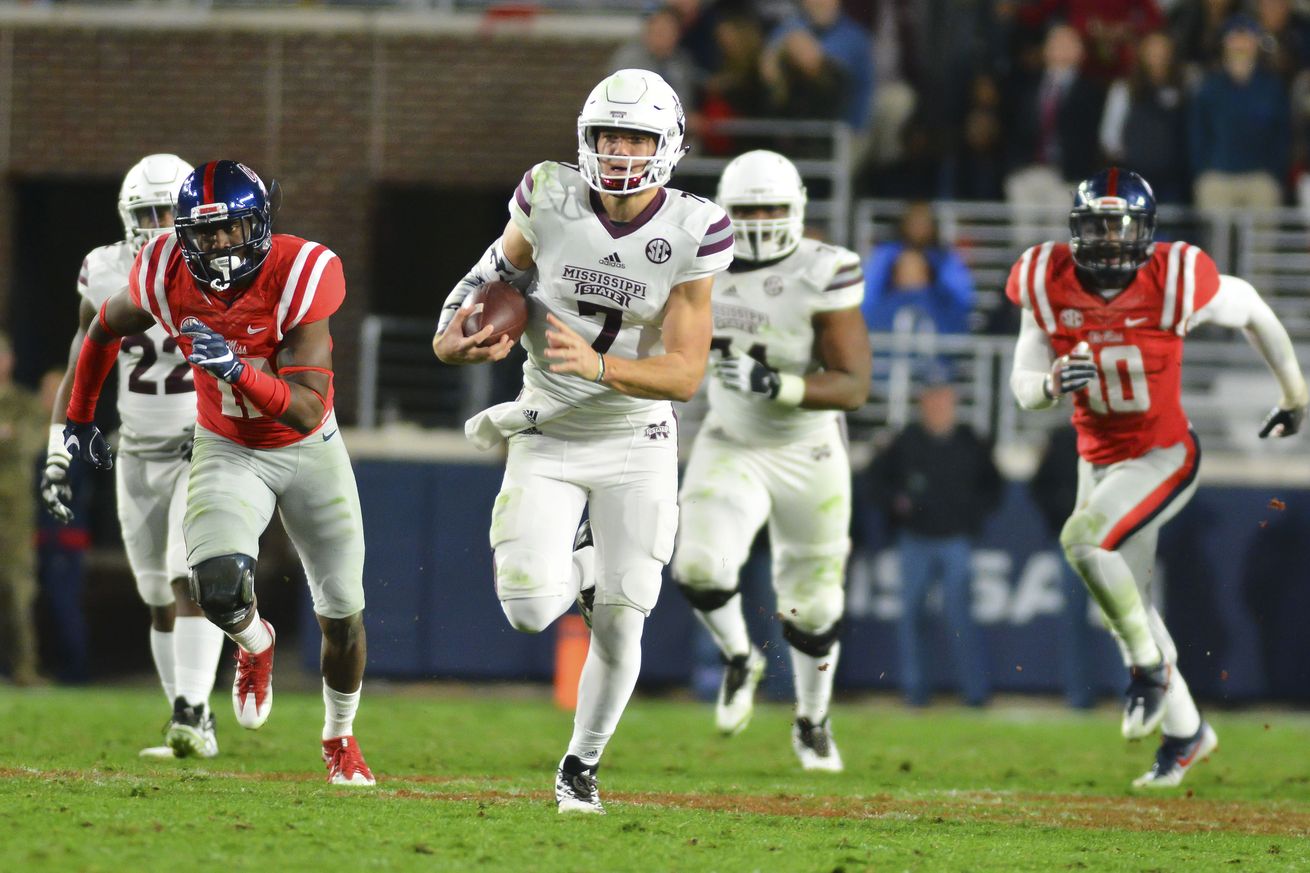
Arkansas entered the game in Starkville with the worst yards per carry allowed in the country. We tweeted about it a little bit, and it started to make its presence on Twitter a little more and more. Then I heard Brian Hadad mention it on Bulldog Sports Radio. So I ran a piece and linked the Twitter search results for the #AlwaysRunNeverPass hashtag to try to give it a little momentum. Ethan took it a step further and put it in the title of a post. Next thing I know, this happened.

There were literally hundreds more I could have put on this post. It’s amazing how it took off.

So thanks to Ethan for taking a couple of tweets I posted during a game as a joke and trying to make it into a movement. And thanks to you guys for picking the ball up and running with it, no pun intended. Okay, maybe it was a little intended. It was really fun to watch unfold.

Ambry Thomas to Michigan: Wolverines Land 4-Star CB Prospect

Ambry Thomas to Michigan: Wolverines Land 4-Star CB Prospect

Scout.com

Ambry Thomas is staying close to home. The 4-star cornerback announced his decision to attend the University of Michigan, staying in his home state.

Thomas made the announcement official with a video on YouTube:

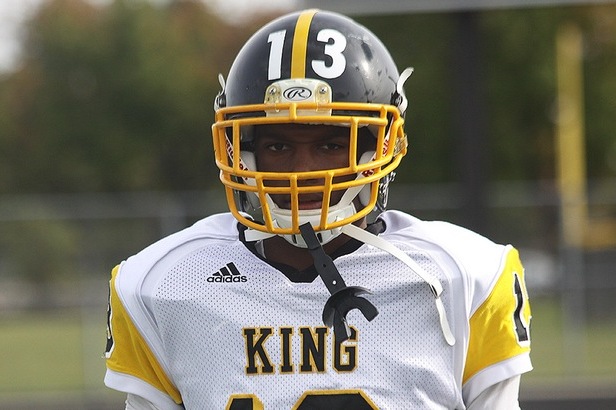
A rising playmaker out of Detroit Martin Luther King High School, Thomas is the No. 58 player overall and fifth-best corner in the class of 2017, per Scout.

The overwhelming expectation throughout Thomas’ recruitment was that he would stay in Michigan. The Wolverines had a 93 percent mark on 247Sports’ Crystal Ball, leaving the remaining 7 percent for Michigan State. A number of schools received unofficial visits, but Michigan and Michigan State understandably got a majority of those looks.

Michigan also made a big impression on his mother, Carmen Thomas.

She told Sam Webb of the Detroit News:

I was very impressed. My biggest take away was the M-PACT (Michigan Professional and Career Transition) program because a lot of the colleges get the kids there to win, win, win – and nobody is concerned with what’s going on after the fact. That was big to me. They keep the kids focused. ‘You’re here to play, but there’s a career after the fact so let’s get this in order.’

Thomas is listed at 5’11 ½” and 170 pounds, which is still a little slight but an improvement over where he was a year ago. That extra weight is part of the reason why he’s moved up from being a low-end top-150 recruit all the way up to breaking the top 100.

A big senior season will only serve to help matters. He’s a borderline 5-star who has wowed at every national camp he’s attended. His performance at The Opening this summer played a big part in his moving up some boards.

As it stands, he’s now a Michigan man and can shift his focus to continuing to get better as he makes the leap to the next level.